contact@adhyyanbooks.com | +91-9986728203









All Case Studies

LAXIMUS BUSINESS VENTURES PRIVATE LIMITED
An Educator's Mission to Empower the Next Generation

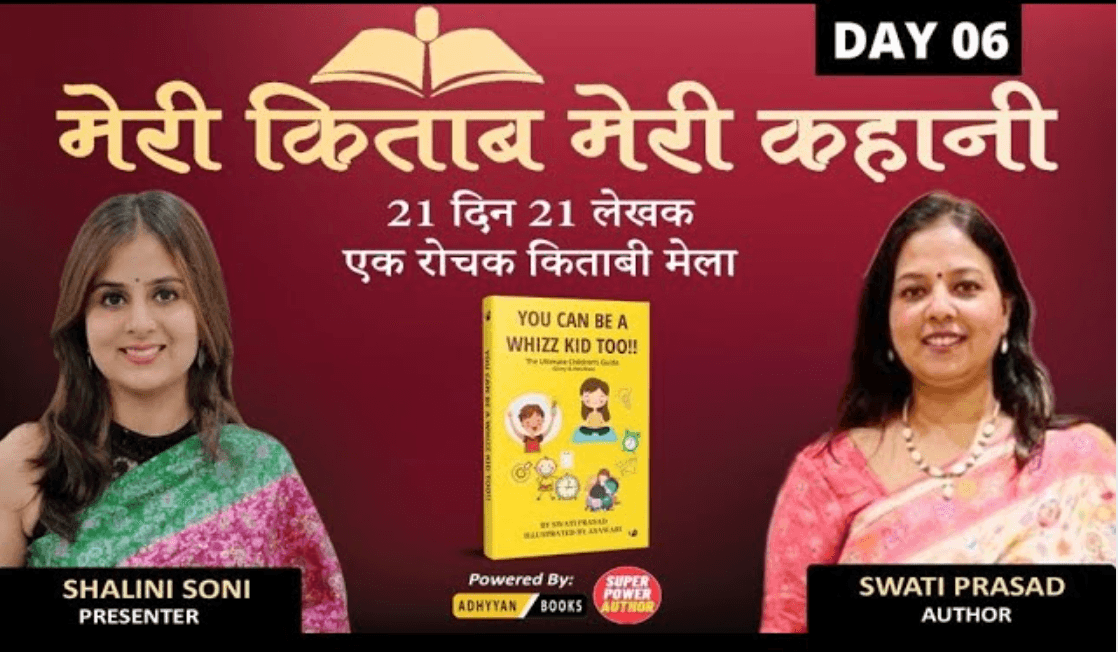
Swati Prasad
NON-FICTION
GENRE
39
NO. OF PAGES
Paperback
BINDING
Introduction
In today's world where children navigate an increasingly complex landscape of digital distractions, peer pressure, and changing family dynamics, one educator recognized a critical gap in how we prepare young minds for life's challenges. Swati Prasad, drawing from her rich experience with the prestigious Delhi Public School Society, has created something extraordinary – a practical handbook that transforms how children ages 7-12 approach decision-making.
"This is a children's book for around the age of 7 to 12. And yes, the learning is definitely for kids of all age groups," explains Swati about her groundbreaking book, "You Can Be a Whiz Kid Too."
What makes Swati's approach revolutionary is her recognition that today's children struggle with specific challenges their parents never faced. Through years of classroom observation and countless parent-teacher conferences, she identified the modern child's most pressing needs: building decision-making abilities, managing emotional responses, handling intensifying peer pressure, developing self-reliance, and establishing healthy habits.
The problems Swati addresses are painfully familiar to today's parents and educators alike. Children increasingly struggle with digital distractions, expect instant gratification, demonstrate limited self-regulation, show excessive dependency on parents, and often struggle to handle rejection or disappointment. Meanwhile, parents battle to find the right balance between freedom and guidance, manage their children's emotional reactions, establish healthy boundaries, maintain consistent rules, and juggle work-life demands.
"The theme is a bit challenging, that is why I have created the story in an interactive way. I have kept it interactive," Swati shares about her thoughtful approach to making complex concepts accessible to young readers. "I have used very simple sentences, no complex. I have tried to write limited characters. I do not want that the children should sit with a dictionary over here."
This child-centered approach distinguishes her work from the many parenting books that speak over children's heads or fail to engage them directly in their own development.
ACTION INSIGHT:
Notice which decisions your child struggles with most frequently. Instead of providing immediate solutions, create a simple "choice chart" together that outlines options and potential outcomes. Even young children can begin connecting choices with consequences when the process is visual and collaborative.
The Pre-Author Life
Swati's path to becoming an influential children's author wasn't a straight line but rather a rich tapestry of diverse experiences that uniquely qualified her to bridge the worlds of education, psychology, and accessible children's content.
"I come from a hospitality background. And after a short duration and exposure in the industry, I joined as faculty with IH in Kolkata," she explains, revealing how her initial career path helped develop her people skills and understanding of human needs.
The pivotal moment came when she joined the renowned Delhi Public School: "I got an opportunity to join as an educator over here. I was there with them for around eight years, but then I discovered that my passion for writing and content creation was like that, so then I decided that, okay, now let me take a break and pursue my passion."
This educational environment became the perfect laboratory for developing her ideas and creativity. "I got exposure to write for a lot of annual day programs on various themes, speeches, various kind of write-ups for school magazines, media at times, and taglines etc. So all this experience actually really enhanced my writing skills," she reflects on how her professional responsibilities nurtured her creative abilities.
Throughout her teaching career, Swati's educational philosophy centered on empowering children rather than controlling them: "As an educator, I always wanted to make the children self-reliant and help them to empower their emotional issues also and not burden the parents a lot with parenting skills."
This foundational belief – that children can and should develop their own decision-making capacities from an early age – became the cornerstone of her later work as an author. The years spent creating phonics-based teaching materials, concept-based learning stories, sight word integration techniques, educational activities, and child-friendly communication strategies all provided the practical experience needed to eventually create a resource that would speak directly to children about their most pressing developmental needs.
ACTION INSIGHT:
Think about your own professional experiences – what unique skills have you developed that could benefit others if shared in a new format? Create a simple list of your 3-5 most valuable insights or approaches that others in your field might not have encountered, and consider one way you might share this knowledge beyond your current role.
The Trigger Point
Great innovations often emerge from witnessing persistent problems firsthand. For Swati, the decision to write came directly from years observing the struggles of both children and parents in the classroom environment.
"I used to read a lot of parenting books. Because of that, and maybe just because I used to also seek advice from the surrounding and the elders," she shares, highlighting her continuous quest for better solutions to help children thrive.
The breakthrough insight came when she recognized that decision-making itself is a habit that can be developed through practice: "If you are disciplined enough to repeat a skill again and again, it will become the second nature, part of your muscle memory, a habit. That's what I saw. So even choosing the proper action based on your decision is a habit."
This profound yet simple realization – that good decisions don't just happen but result from practiced skills – became the foundation for her innovative approach. While most children's books focus on entertainment or academic skills, Swati identified a critical gap in resources addressing the fundamental life skill of choice-making.
"Parents used to come down to seek advice and suggestions to handle the emotional issues of the children. So that was what I wanted to help them out with," she explains, underscoring the practical need she observed repeatedly in her school community.
Her development process uniquely blended timeless wisdom with cutting-edge research. "My book is inspired by and my learning is actually more based on, from chapter 2 there are two verses, 62 and 63 [of the Bhagavad Gita]...but because this book is for the children of today, so I had to actually go through a lot of other books as well."
She even incorporated experimental research methods: "I did a marshmallow experiment, which is like cookies to develop delayed gratification," she shares, referencing the famous Stanford study on self-control that predicted children's future success based on their ability to wait for rewards.
This thoughtful integration of ancient wisdom and modern psychology, translated into child-friendly formats, demonstrates why Swati's approach offers something truly unique in the crowded children's book market.
ACTION INSIGHT:
Practice the "pause button" technique with your child this week. When facing a decision, teach them to mentally press "pause," take three deep breaths, and consider "What might happen if I choose this?" Simple pausing before acting is the foundation of better decision-making and can be practiced daily in low-stakes situations.
Choosing the Topics
What exactly makes a child a "whiz kid"? Swati's answer challenges conventional definitions focused solely on academic achievement or natural intelligence.
"The dictionary definition says that a whiz kid is a kid who is remarkably intelligent, clever and successful, especially at something," she explains, before offering her more holistic perspective: "A true whiz kid is a child with a mind full of goodness and has the ability to make the right decision in any given situation."
This redefinition forms the heart of her book's message – that true intelligence includes the wisdom to make good choices, a skill that can be systematically developed rather than left to chance or natural inclination.
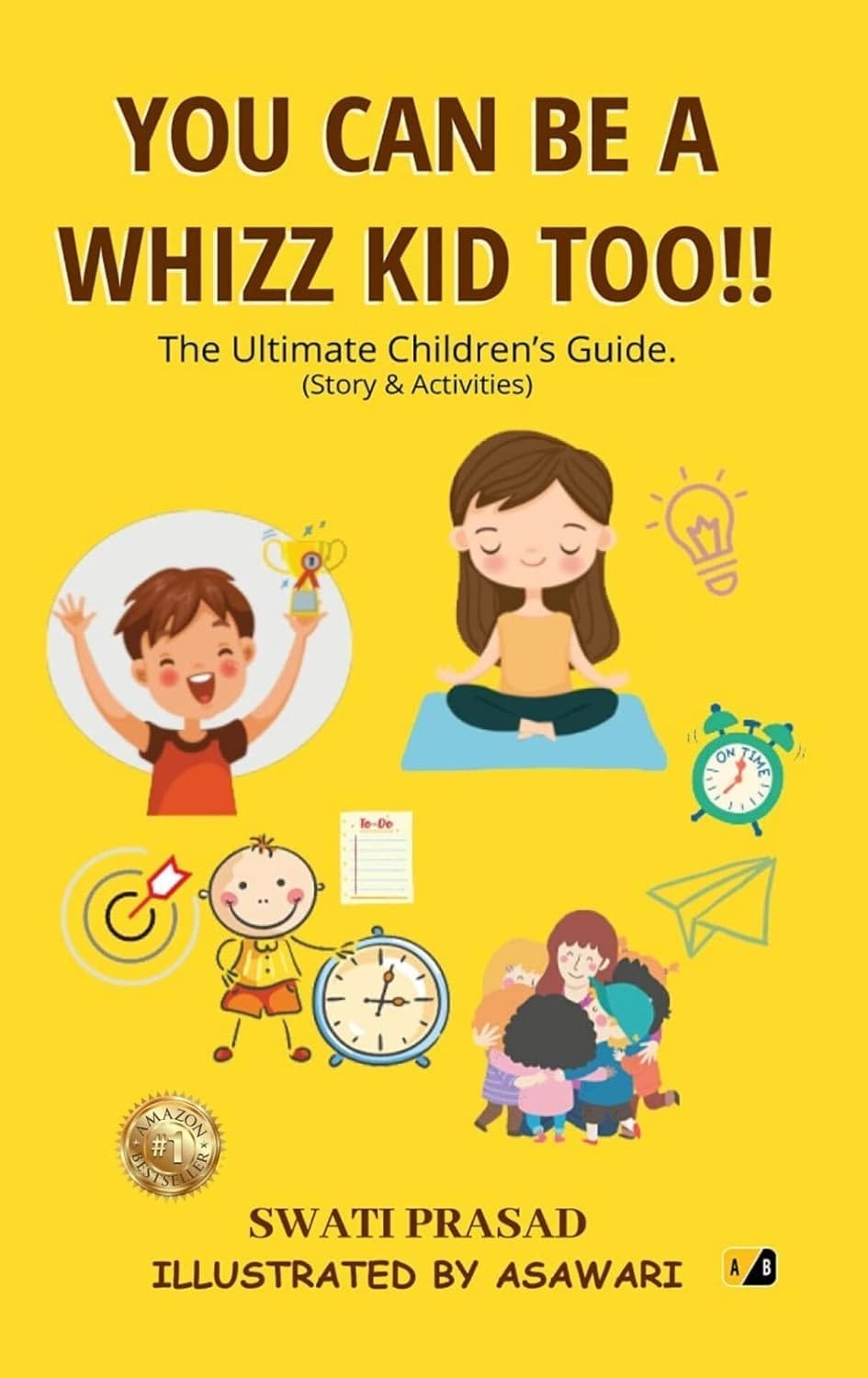
The book's structure cleverly uses storytelling to demonstrate these principles in action: "This story is about a boy called Laksh, who's a whiz kid. And who possesses all the qualities to suit the title. It shows how Laksh had to adjust when his father had got transferred from a small town to a big city," she explains.
Through relatable situations involving peer relationships, school challenges, and everyday temptations, young readers see decision-making frameworks applied to scenarios they recognize from their own lives. This narrative approach makes abstract concepts concrete for children who learn best through story.
What truly sets Swati's book apart, however, is her innovative concept of "ladders": "This is a pictorial ladder of growth and ladder of downfall. Where each step is the stage, there are different stages to the pathway of either towards the reward or towards the consequences, downfall."
These visual ladders transform decision-making from an invisible mental process into a tangible journey with clearly marked steps and outcomes. By making the cause-and-effect relationship visual, children can literally see how small choices connect to larger consequences – a revolutionary approach to teaching future thinking to young minds still developing abstract reasoning skills.
The book also includes practical components like affirmation charts, learning guides, and monthly progress trackers that transform passive reading into active skill development. This multifaceted approach engages different learning styles and provides tools for ongoing practice rather than one-time consumption.
ACTION INSIGHT:
Create a simple "decision ladder" with your child for one recurring challenge they face (perhaps homework completion, screen time management, or sibling conflicts). Draw a ladder on paper with 4-5 rungs. On one side, write the positive choices and their upward consequences; on the other, the negative choices and downward results. Post this visual reminder where your child can reference it when facing similar situations.
Publishing Journey
Behind every transformative book lies a story of collaboration, perseverance, and support. Swati's journey from educator with an idea to published author reveals how family tradition and professional partnerships combined to bring her vision to reality.
"I think there are many writers in my family, starting from my grandfather, but most of them have written on the subject of their expertise. But the creative mindset I have got, I think I got it from my father and I have kept him involved in this book as well," she shares, highlighting how her writing connects to a multigenerational tradition of knowledge-sharing.
This family creative legacy provided both inspiration and practical support throughout the writing process. Feedback from family members, especially those with parenting experience, helped refine the content to ensure it addressed real-world challenges effectively.
Perhaps the most crucial creative partnership came in the form of the book's illustrator: "The entire illustration has been designed and created by my talented and wonderful illustrator, who is Reha Sawhary. In fact, she was there along with me throughout the writing journey and to understand my mind to create the pictures."
This close collaboration between writer and illustrator ensured that the visual elements didn't merely decorate the text but actively enhanced the learning experience for young readers. For children still developing reading fluency, these illustrations become crucial vehicles for understanding complex concepts that words alone might not convey effectively.
The publishing process itself became another valuable learning journey: "My short journey with Adhyan was very comfortable. It was a homely atmosphere where the entire process was like a hand-holding by the team and the wow factor for me was of course the blueprint of book writing," she explains about the structured approach that helped transform her educational expertise into an effective book format.
Swati's publishing experience demonstrates how finding the right partners – those who understand both the vision and the audience – can make the difference between a good idea and a truly impactful finished product.
ACTION INSIGHT:
When pursuing any creative project, identify your "knowledge gaps" early and seek specific collaborators who complement your strengths. Make a list of what you're expert at and what aspects require outside perspective or skills. Remember that the most successful projects often combine different types of expertise rather than relying on one person to master everything.

Marketing and Branding
In a marketplace flooded with children's entertainment, Swati took a boldly different approach – positioning her book as a practical teaching tool rather than just another story. This distinction has proven key to reaching parents and educators truly seeking solutions rather than mere distraction for their children.
"This is not a bedtime story book. It is a challenging book. But I tried to help, like challenging your theme, I tried to bring it through an interactive story and activities," she explains about the book's unique positioning in the children's literature market.
This clarity of purpose shapes everything from the book's design to its distribution strategy. Rather than competing with entertainment-focused children's books, "You Can Be a Whiz Kid Too" addresses a specific developmental need with targeted solutions.
The book's physical design reflects this practical approach – colorful illustrations capture attention, simple language ensures comprehension, and interactive elements transform passive reading into active learning. The visual components particularly support children who learn best through seeing and doing rather than just reading or listening.
Swati also provides clear guidance on how to use the book effectively: "You don't have to read it all at once. You have to look at the affirmation chart. Read aloud the affirmation chart. If you read it every day, it will go into your mind," she advises, highlighting the book's ongoing utility rather than one-time consumption.
This usage guidance transforms the book from a product into a process – a critical distinction for materials aiming to develop habits and skills rather than simply convey information or entertainment. By encouraging regular review of affirmation charts, ongoing reference for decision-making, and gradual skill development, Swati ensures the book becomes a practical tool for lasting change rather than a quickly forgotten story.
Her distribution approach similarly targets those seeking solutions – parents concerned about decision-making, professional educator networks, and schools looking for character development resources. By offering special pricing for educational institutions (a 25% discount promotion), she removes barriers between her guidance and those who need it most.
ACTION INSIGHT:
When creating any resource intended to help others, consider how you can transform one-time consumption into ongoing engagement. What simple follow-up tools or practices could you include that encourage regular application of the core ideas? Even one page of reflection questions or a simple tracking chart can dramatically increase your content's practical impact.
The Business Impact
The true measure of any educational resource lies not in sales figures but in transformed lives. For Swati, seeing her work make a tangible difference in how children approach choices has been the greatest reward of her publishing journey.
"I think the best feedback I got was from the teachers and the mothers, because they were like, yes, this is very important to teach them," she shares, revealing how professionals and parents alike recognize the book addresses a critical developmental need often overlooked in traditional education.
The impact of Swati's work extends across multiple dimensions – helping individual children develop emotional regulation, improving parent-child communication around difficult choices, building foundations for lifelong decision-making skills, offering frameworks for positive habit formation, and enhancing value-based education approaches in classroom settings.
On the individual level, children develop greater self-control, learn valuable delayed gratification skills, build resistance to peer pressure, form positive habits, and gain deeper understanding of how actions connect to consequences. Within family and educational environments, the book provides tools for parent-teacher collaboration, offers new classroom management approaches, integrates smoothly with value education initiatives, provides character development frameworks, and offers gentle behavioral modification techniques.
Swati remains realistic about the ongoing nature of this development: "I don't really claim they will learn the art at once. We need to basically keep helping them to develop this as a habit by encouraging them to read the learning chart and the affirmation chart and practice the skill of decision-making quite often," she notes.
This honesty about the gradual nature of skill-building reflects Swati's deep understanding of child development – true mastery comes not from one-time exposure but from consistent practice with supportive guidance. By creating resources that support this ongoing process, she offers value that extends far beyond the initial reading experience.
ACTION INSIGHT:
Identify one important skill you're helping a child develop and create a simple weekly check-in ritual to review progress together. This might be a special conversation during Sunday breakfast or a Thursday evening "skills chat." Consistent, low-pressure check-ins about progress help children see skill development as an ongoing journey rather than a one-time achievement or failure.
Final Advice for Aspiring Authors
Swati's journey from educator to influential author offers valuable guidance for others hoping to transform professional expertise into resources that can help families and children thrive. Her experience highlights the importance of authentic knowledge, collaborative development, and clear purpose.
"For parents it is that let's work together in every way we can to empower our children with the skill of decision making," she advises, emphasizing the collaborative nature of education and child development.
For those considering similar projects, Swati's path demonstrates the value of drawing from genuine classroom experience rather than theoretical knowledge alone. Her years working directly with children and parents provided insights no research alone could supply. Similarly, her commitment to researching both traditional wisdom texts and contemporary psychology created a unique foundation for her approach.
The collaborative nature of her development process – incorporating feedback from colleagues, family members, and her illustrator – ensured the final product addressed real needs effectively. This willingness to seek and incorporate diverse perspectives strengthened both the content and its presentation.
Perhaps most importantly, Swati maintained unwavering focus on practical application throughout the project. Rather than creating content that merely sounds impressive, every element of her book was designed with real-world usage in mind. This commitment to utility over theory distinguishes truly helpful resources from those that merely restate familiar information.
The transformative impact of this project on Swati herself also deserves attention: "I am like motivated to write many more books now. In fact, I have upskilled myself. I now know the art of writing and publishing a book," she reflects. By pushing beyond her comfort zone as an educator to become an author, she discovered new capabilities and passions that continue to evolve.
ACTION INSIGHT:
Before starting any project designed to help others, write down your answer to: "What specific problem am I uniquely qualified to help solve?" Focus your efforts on areas where your personal experience, professional knowledge, and genuine passion overlap. The most valuable contributions often emerge from this intersection of expertise and authentic concern.
Conclusion
Swati Prasad's journey from classroom teacher to innovative author demonstrates the profound impact one educator can have when they identify a critical need and create practical solutions. Her book "You Can Be a Whiz Kid Too" represents not just a collection of ideas but a transformative approach to one of childhood's most important developmental tasks – learning to make sound decisions.
"I tried to build a foundation. And in fact, we all should try on the foundation of the road on decision making before they can actually start driving on it," she emphasizes, highlighting the preventative nature of her approach rather than simply addressing problems after they arise.
What makes her contribution particularly valuable is her understanding that decision-making skills must be developed early, consistently, and through engaging methods that speak directly to children. By creating resources that children actually enjoy engaging with – through stories, illustrations, and interactive elements – she bridges the gap between important life skills and the natural learning preferences of young minds.
The enthusiastic reception from both educators and parents confirms that Swati identified a genuine need in how we prepare children for life's challenges. By distilling complex psychological concepts into accessible, engaging activities, she has created a resource that empowers children to develop the habits and mindsets needed for making sound decisions throughout life.
Perhaps most inspiringly, her work reminds us that the most valuable educational innovations often come not from distant researchers or theoretical experts, but from committed educators who directly observe children's needs and creatively address them. In transforming her classroom wisdom into a widely available resource, Swati multiplies her impact far beyond the students she could personally teach.
In today's complex world, helping children develop strong decision-making foundations may be one of the greatest gifts we can provide. Through thoughtful resources like "You Can Be a Whiz Kid Too," parents and educators gain practical tools for this crucial task, equipping the next generation with skills that will serve them in every area of life.
ACTION INSIGHT:
Take 15 minutes this week to observe and note the decision-making patterns of a child in your life. Without judgment, simply notice: Do they decide quickly or slowly? Ask for help or proceed independently? Consider consequences or focus only on immediate outcomes? Change course when new information appears? This awareness is the first step toward providing the specific decision-making support each unique child needs.

Annual Membership Regular
Price Rs. 9980/-
(One-Time-Offer Only ₹499/-)
Unlock the secrets of Bestselling Authors
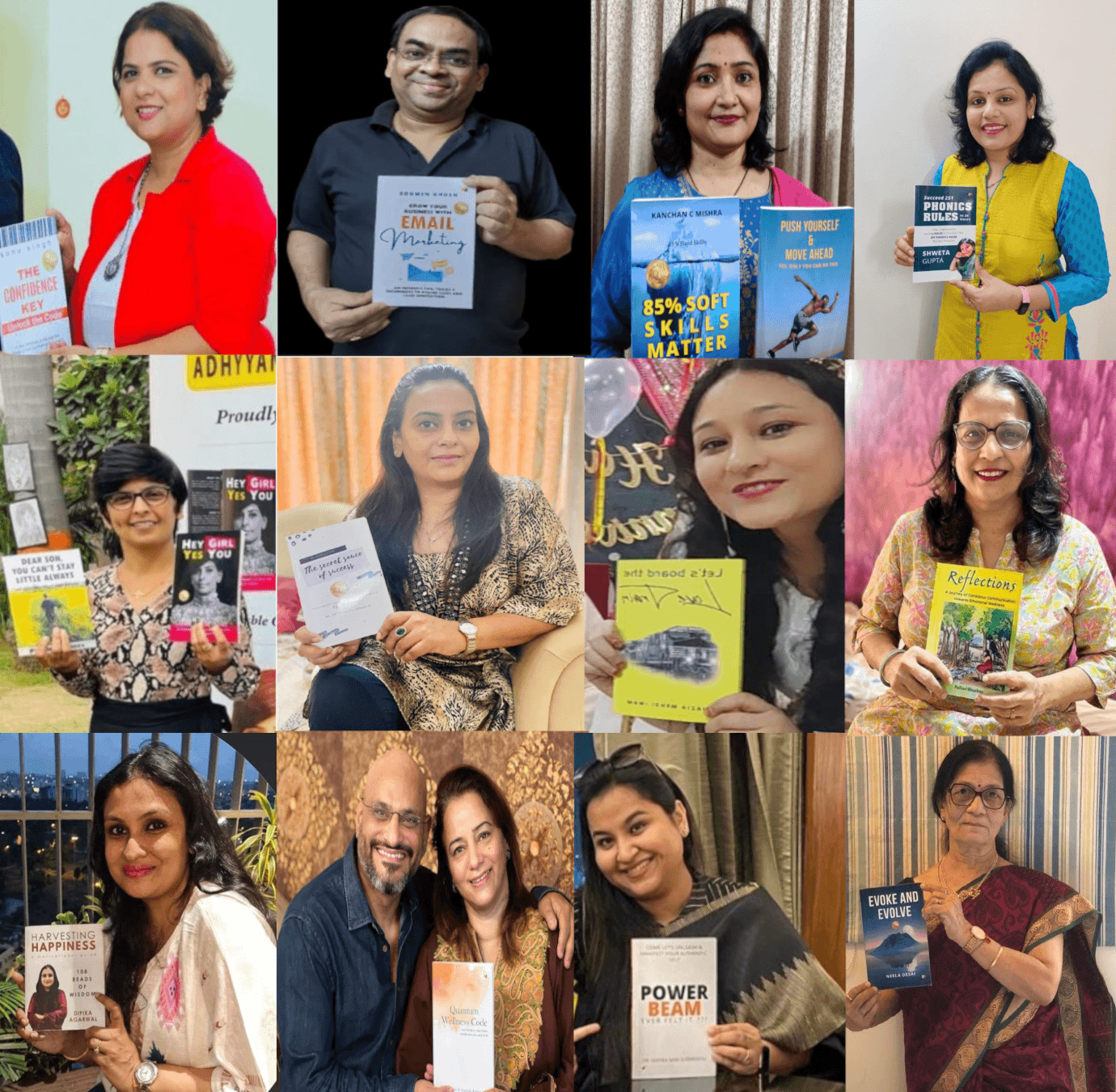
📘 Over 100 more case studies like these...
We Have Been Featured In..
 Unlock all case studies

All Case Studies

Followers
11000+

Followers
8439

Subscribers
11100+

Groups
500+
LAXIMUS BUSINESS VENTURES PRIVATE LIMITED