contact@adhyyanbooks.com | +91-9986728203









All Case Studies

LAXIMUS BUSINESS VENTURES PRIVATE LIMITED
How Sumit Gupta Blended Finance and Poetry to Create a Life of Meaning
Sumit Gupta
NON-FICTION
GENRE
227
NO. OF PAGES
Paperback
BINDING
Introduction: When Numbers Meet Emotions
In a world that often forces us to choose between practicality and passion, Sumit Gupta stands as living proof that we can honor both sides of ourselves. His journey from structured finance professional to published poet isn't just inspirational—it's a masterclass in how seemingly opposite pursuits can create a beautifully balanced life.
"I have been writing for 25 years. It started as an outlet for emotions and gradually became a passion," Sumit shares with quiet confidence. "I never thought I would become a published author, but when I saw my poems shaping into a book, I realized that my words could connect with people."
His collection "Kavita: Safar Mere Shabdo ka" (Poetry: The Journey of My Words) represents more than just 227 pages of verse—it's the culmination of a lifelong relationship with language that flourished alongside a successful career in finance. This parallel development of analytical prowess and emotional expression offers a roadmap for anyone struggling to reconcile their practical responsibilities with creative callings.
What makes Sumit's story particularly compelling is how he transformed the challenges of his early life—constant relocations, new schools, fleeting friendships—into the very foundation of his artistic voice. His poetry captures the transient nature of human connection, the beauty found in impermanence, and the universal emotions that bind us all.
"Poetry is an art form that captures the essence of emotions, translating them into words that resonate deeply with readers," Sumit explains. For him, poetry isn't merely self-expression—it's a bridge between souls, a way to transform personal experience into universal understanding.
ACTION STEP:
Take 10 minutes today to identify the seemingly contradictory aspects of your personality or life path. Rather than seeing them as conflicts to resolve, explore how they might complement each other. How might your analytical side enhance your creativity? How might your emotional intelligence improve your problem-solving? Write down three specific ways these apparent opposites could work together to create something unique.
The Roots of Expression: A Childhood in Motion
Sumit's earliest memories are colored by change and adaptation. As the son of a banking professional, his childhood unfolded across a changing landscape of cities and towns across India. Each move meant new schools, new faces, and the challenge of rebuilding his social world from scratch.
"I never had a permanent set of friends growing up. Every couple of years, we moved to a new city, a new school, and a new environment. I think that transient nature of life got embedded in my poetry," he reflects, revealing how these experiences shaped his perspective.
This constant state of flux taught Sumit crucial life skills that would later inform both his financial acumen and poetic sensibility:
Adaptability: Learning to thrive in new environments became second nature, fostering resilience and openness to change.
Observation: As a perpetual newcomer, Sumit developed a keen eye for human behavior and social dynamics—skills that would later help him capture nuanced emotions in his poetry.
Appreciation for Moments: Understanding the temporary nature of connections made him value authentic exchanges more deeply.
Cultural Awareness: Exposure to diverse regional cultures across India enriched his worldview and provided a tapestry of experiences to draw from in his writing.
While these relocations presented challenges—particularly the difficulty of maintaining long-term friendships—they also gifted him with a unique lens through which to view the world. His poetry reflects this dual perspective of insider and outsider, of belonging and departure.
As an adult, Sumit channeled his analytical abilities into finance, building a career around numbers, projections, and logical frameworks. Yet even as he excelled professionally, words remained his faithful companions.
"Finance has its structure, its logic. Poetry, on the other hand, is fluid, emotional, and free-flowing. I think my professional life and my creative life complement each other in an interesting way," he explains. This balance between structure and freedom created a healthy tension in his life—each pursuit offering relief from the other.
His family, particularly his wife Juhi, recognized the importance of his creative expression and encouraged its development alongside his professional responsibilities. This support system proved crucial in his eventual transition from private poet to published author.
ACTION STEP:
Consider how your early life experiences—particularly the challenging ones—have shaped your unique perspective. Choose one difficulty from your past and list three strengths or insights it helped you develop. Then brainstorm how these qualities could be applied to a current goal or creative project. Our challenges often become our greatest assets when properly understood.
The Turning Point: When Personal Expression Becomes Public Gift
For twenty-five years, Sumit's poetry remained largely private—words filling personal diaries, shared occasionally with close family and friends. His verses served as emotional release, creative exercise, and self-reflection. The idea of publishing never seriously crossed his mind until a chorus of voices began suggesting his work deserved a wider audience.
"The turning point was when I realized that my poems were not just for me. They resonated with others. My wife, my family, and my friends motivated me to compile my poems into a book," he says, acknowledging the gentle push that changed his trajectory.
This transition from private writer to published author represents a significant psychological journey—one that many creative people struggle with. It requires overcoming:
Self-doubt: Questioning whether your work is "good enough" for public consumption Vulnerability: Opening yourself to criticism and judgment Identity shift: Seeing yourself as a legitimate creator rather than a hobbyist Purpose clarification: Understanding why sharing your work matters
For Sumit, the catalyst was witnessing how his words affected others. When friends found comfort in his poems about grief, when family members saw themselves reflected in his observations about relationships, he began to understand that keeping his work private might be denying others a valuable gift.
This realization mirrors a universal truth about creative expression: what begins as personal healing often has the potential to heal others. Our most authentic expressions—born from our unique experiences—paradoxically become the most universally relatable.
The decision to publish wasn't made lightly. It meant organizing scattered writings spanning decades, selecting which poems to include, and perhaps most challengingly, believing that his voice deserved to be heard.
ACTION STEP:
Identify one creative pursuit or idea you've kept private out of fear or doubt. Share a small sample with three trusted people whose opinion you value, asking for specific feedback. Notice not just their critique but their emotional response. Often our work connects with others in ways we never anticipated, and this feedback can provide the confidence to take your creation to the next level.
Finding Focus: The Art of Authentic Expression
Unlike writers who work within a single genre or theme, Sumit's approach to poetry embraces the full spectrum of human experience. "Safar Mere Shabdon Ka" reflects this expansive view, featuring poems that range from deeply personal reflections to societal commentary.
"I don't write in a structured way. I write when emotions demand expression. That's why my book covers a wide spectrum of feelings," he explains. "Some poems are deeply personal, while others reflect social themes."
This emotion-driven approach creates authenticity that readers immediately recognize. Rather than forcing his creativity into predetermined categories, Sumit allows his emotional responses to guide his writing. This natural flow connects with readers who recognize the genuine quality of his expression.
One of his most powerful works emerged from his response to the Nirbhaya case in 2012—a brutal crime that shocked India and sparked national conversation about women's safety. In the midst of collective grief and outrage, Sumit's poem gave voice to emotions many were struggling to articulate.
This ability to translate both personal and collective experiences into words demonstrates the range of his poetic voice. His work explores:
Love and relationships: The complexities of human connection Social issues: Reflections on justice, equality, and social change Personal growth: The evolution of self through life's challenges Transience: The beauty and pain of impermanence Cultural identity: The influence of heritage on individual experience
What unites these diverse themes is Sumit's commitment to emotional truth. Rather than writing what he thinks will be popular or fashionable, he trusts his authentic response to life's experiences.
For readers, this translates to poems that feel like conversations with a trusted friend—honest, insightful, and deeply relatable. His work creates a mirror in which readers can see their own experiences reflected and better understood.
ACTION STEP:
Create an "emotional inventory" by listing 5-7 significant emotional experiences you've had in the past year. For each one, write 3-5 sentences about what triggered the emotion and how it felt physically and mentally. Don't worry about creating "art"—focus on honest description. This practice builds the emotional awareness that fuels authentic creative expression, regardless of your medium.
The Journey to Publication: Transforming Private Thoughts into Public Art
The path from personal diaries to published book presented Sumit with both practical and emotional challenges. What had been a private practice for decades now required structure, organization, and the courage to share vulnerable parts of himself with strangers.
"The toughest part was organizing my thoughts and structuring my poems into a cohesive collection," he shares, highlighting the often-overlooked practical aspects of bringing creative work to life.
This process involved several critical stages:
Selection: From hundreds of poems written over 25 years, Sumit had to choose which pieces would make the final collection. This required both emotional detachment and artistic discernment.
Organization: Unlike a novel with a clear narrative arc, a poetry collection needs thematic coherence while still offering variety. Sumit worked to create a reading experience that flowed naturally while showcasing different aspects of his work.
Editing: Even the most beautiful poems often benefit from refinement. Working with editors, Sumit refined his language without losing the authentic voice that made his writing powerful.
Emotional processing: Preparing his work for publication meant revisiting poems written during different life stages—some joyful, others painful. This retrospective journey became an unexpected opportunity for personal growth and integration.
The publishing team provided crucial guidance through this process, helping Sumit transform his personal writings into a professional product without compromising their emotional impact.
What makes poetry publishing particularly challenging is the intimate nature of the work. Unlike more objective writing, poetry often reveals the author's innermost thoughts and feelings. This vulnerability requires tremendous courage, especially for someone accustomed to the more analytical world of finance.
Yet this courage ultimately creates the connection that makes poetry powerful. By sharing his authentic experiences and emotions, Sumit created a space where readers could recognize and process their own feelings.
ACTION STEP:
Choose one personal project you've been wanting to bring to completion. Break it down into four stages: creation, organization, refinement, and sharing. For each stage, identify one specific action you can take this week to move forward. Remember that bringing creative work into the world is both a practical and emotional journey—acknowledge your feelings at each stage without letting them prevent progress.


Finding Readers: The Art of Connecting Through Words
For poets especially, finding the right audience can be challenging in a marketplace dominated by fiction and self-help. Sumit approached this challenge with the same thoughtful balance that characterizes his life—combining practical strategies with authentic connection.
"I believe word-of-mouth is the best marketing for poetry. When a reader finds a poem that speaks to them, they naturally share it with others," he explains, emphasizing the organic spread of work that resonates emotionally.
His approach to reaching readers included:
Social media engagement: Sharing carefully selected excerpts that could stand alone yet invite readers to explore more
Literary community participation: Connecting with poetry groups, book clubs, and writers' circles to build relationships with fellow poetry lovers
Live readings and events: Participating in literary festivals where the emotional impact of his work could be experienced directly
Limited-time promotions: Making his book accessible to new readers through strategic pricing
What sets Sumit's approach apart from purely commercial marketing is his focus on genuine connection. Rather than viewing readers as consumers, he sees them as partners in a shared emotional experience. This authenticity resonates in a digital age where many marketing efforts feel calculated and impersonal.
His participation in literary festivals proved particularly valuable, offering opportunities to discuss his creative process and hear directly from readers. These face-to-face interactions created a feedback loop that enriched his understanding of how his words affected others.
The relationships formed through these events extended beyond book sales, creating a community of readers and fellow writers who continue to support and inspire each other. This network represents a form of success that transcends commercial metrics—a community built around shared appreciation for the power of words.
ACTION STEP:
Identify your ideal audience—not just demographically, but emotionally. What are they struggling with? What brings them joy? What questions are they asking? Then create one piece of content (a social media post, blog article, or even a conversation) that speaks directly to that emotional need. Authentic connection begins with understanding who you're trying to reach and what truly matters to them.
Beyond the Book: The Ripple Effect of Creative Courage
The publication of "Safar Mere Shabdon Ka" marked not an endpoint but a new beginning in Sumit's creative journey. The impact of his work extended far beyond book sales, creating ripples of influence that continue to expand.
"When people reach out to me saying that my words touched them, that's the real success. It's not about how many copies I sell—it's about the connection I build with my readers," he emphasizes, revealing a definition of success that values impact over income.
The broader effects of his work include:
Inspiration for emerging writers: Sumit's journey from finance professional to published poet has encouraged others to pursue their creative passions alongside their careers.
Emotional support for readers: His poems addressing grief, loss, and personal struggle have provided comfort to readers navigating similar experiences.
Community building: Through his work, connections have formed among people who might otherwise never have met, creating networks of support and creative exchange.
Personal growth: The process of publishing and connecting with readers has deepened Sumit's own understanding of his craft and purpose.
Perhaps most significantly, Sumit's example challenges the limiting belief that creative pursuits must be abandoned for practical careers. By maintaining both his finance profession and his poetic practice, he demonstrates that we need not choose between security and self-expression.
His journey embodies a more integrated approach to life—one where analytical thinking enhances creativity, and emotional awareness enriches professional endeavors. This balance offers a model for sustainable creative practice that doesn't require financial sacrifice or professional compromise.
ACTION STEP:
Consider how your creative pursuits and professional skills might actually enhance each other rather than compete. Make a two-column list: in one column, list skills from your work or practical life; in the other, list elements of your creative interests. Draw lines connecting complementary skills. This visual exercise often reveals surprising ways your different life domains can strengthen rather than deplete each other.
Wisdom for the Journey: Advice for Aspiring Creators
When asked what guidance he would offer others considering a similar path, Sumit shares insights gleaned from his 25-year writing journey and recent publishing experience:
Write consistently: "Even if you don't plan to publish, writing is a form of self-expression. Keep writing." This practice-centered approach builds both skill and self-awareness over time, regardless of external outcomes.
Share your work: "Your words might inspire someone. Don't keep them locked away in a diary." Sumit emphasizes that creative expression fulfills its highest purpose when it creates connection between people.
Build your support system: "Surround yourself with people who believe in your talent. Their encouragement can make all the difference." He acknowledges the crucial role his family, particularly his wife Juhi, played in his journey from private writer to published author.
Maintain authenticity: "Write what you feel, not what you think will sell. Readers connect with honesty." This commitment to emotional truth creates work that resonates across diverse experiences and backgrounds.
Cultivate patience: "Success in writing is not immediate. It takes time, revisions, and a lot of persistence to reach the right audience." Sumit's 25-year journey to publication exemplifies the long-view perspective essential for creative fulfillment.
These principles apply not just to writing but to any creative endeavor or personal growth journey. They reflect a mature understanding that meaningful achievement comes through consistent practice, authentic expression, supportive relationships, and patient persistence.
Underlying all these principles is perhaps Sumit's most powerful insight: that creative expression isn't a luxury or indulgence but a fundamental human need. "Writing is therapy," he explains. "It helps you process emotions, reflect on experiences, and connect with others."
ACTION STEP:
Begin a simple creative practice that you can sustain daily for just 15 minutes. Whether writing, drawing, music, or another form of expression, the key is consistency rather than duration or perfection. Set a 30-day goal and track your progress. Remember that creative habits build emotional resilience and self-awareness that benefit all areas of life.
The Continuing Story: Balancing Two Worlds
Today, Sumit continues to balance his finance career with his creative practice, finding that each enriches the other. His analytical skills bring clarity and structure to his poetry, while his emotional intelligence enhances his professional relationships and decision-making.
His story challenges the false dichotomy between practical and creative pursuits that leads many people to abandon their artistic passions in adulthood. Instead, he offers a model for integration—a life where different aspects of our personalities and talents work in harmony rather than competition.
This integrated approach creates sustainability that purely passion-driven or purely practical paths often lack. By honoring both his analytical mind and his emotional heart, Sumit has created a life that feels complete and authentic.
"Writing is therapy. It helps you process emotions, reflect on experiences, and connect with others. If you have something to say, put it into words. You never know who might need to hear it," he concludes, inviting others to discover their own balance between expression and action, emotion and analysis, creativity and practicality.
In a world that often pressures us to specialize and choose a single path, Sumit Gupta's journey reminds us that our most fulfilling lives may emerge from embracing our contradictions rather than resolving them. His success—as both finance professional and published poet—stands as testimony to the power of living a life in balance.
ACTION STEP:
Reflect on an area of your life where you've been forcing an "either/or" choice when a "both/and" approach might be possible. What small step could you take this week to begin integrating these seemingly opposing aspects of your life? Remember that creativity thrives in the tensions between structure and freedom, logic and emotion, stability and risk. Embracing these paradoxes often leads to our most original contributions to the world.

Annual Membership Regular
Price Rs. 9980/-
(One-Time-Offer Only ₹499/-)
Unlock the secrets of Bestselling Authors
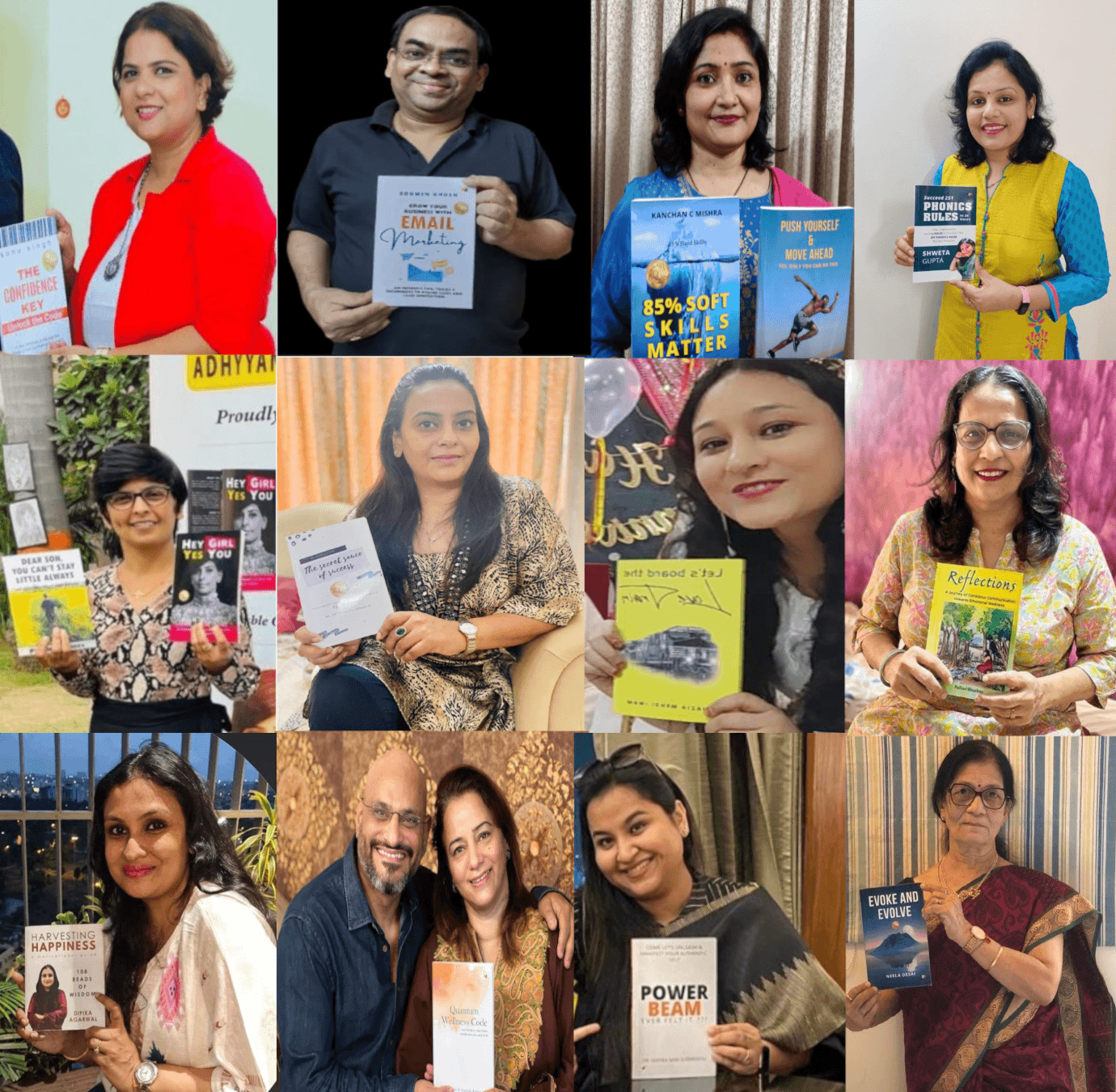
📘 Over 100 more case studies like these...
We Have Been Featured In..
 Unlock all case studies

All Case Studies

Followers
11000+

Followers
8439

Subscribers
11100+

Groups
500+
LAXIMUS BUSINESS VENTURES PRIVATE LIMITED