contact@adhyyanbooks.com | +91-9986728203









All Case Studies

LAXIMUS BUSINESS VENTURES PRIVATE LIMITED
How I Turned My Passion for Sports into a Voice for the Planet

Shelly Shaurya
Author
NON-FICTION
GENRE
267
NO. OF PAGES
Paperback
BINDING
Introduction
In the crowded world of environmental sustainability, where complex policies often overshadow practical solutions, Shelly Shaurya discovered a powerful truth: real impact happens when research escapes government offices and reaches everyday people. His remarkable journey from professional cricket player to influential environmental author shows us that anyone can bridge the gap between knowledge and action when driven by purpose.
With a unique background spanning professional sports, environmental research, and international business strategy, Shaurya spotted a critical problem in environmental communication. Government reports, though detailed, rarely reached regular people—leaving most unaware of simple solutions to environmental challenges. His experience as both an athlete and researcher gave him a special lens for solving this communication problem.
"Every environmental concept has a practical application," Shaurya emphasizes. "The challenge isn't in doing research – it's in making that research useful and doable for everyday people." This insight became the foundation of his approach to environmental writing. His work transforms complex environmental ideas into practical, actionable solutions that both individuals and businesses can implement.
ACTION STEP:
Look at environmental challenges around you through a practical lens. Ask yourself: "What one environmental concept could I translate into everyday action for my community?" Write down three ways to explain this concept in simple terms that anyone could understand and apply.

Pre-Author Life
Shaurya's path to becoming an author was built on diverse experiences that shaped his unique view of environmental sustainability. His early career as a professional cricketer spanning 14 years, including appearances in IPL and Olympic trophy matches, taught him valuable lessons about discipline, time management, and excellence.
His approach to balancing sports and academics was methodical:
Early morning cricket training before school
Regular academic classes during the day
Evening cricket practice sessions
Dedicated study time in the late evening
Consistent focus on both athletic and academic goals
"I was very motivated to do well in education," he shares. "And then when I started playing cricket, I was motivated to do well there as well. So trying to balance that automatically pushed me into managing my time better." This dual focus would later prove invaluable in his research and writing career.
His professional growth included several key phases:
Professional Cricket Career
14 years of professional play
IPL experience
Olympic trophy participation
Development of disciplined approach
Academic Achievement
NTSC scholarship
MBA from Asade, Spain
Focus on environmental economics
Research specialization
Professional Consulting
Work with National Productivity Council
Ministry of Commerce and Industry projects
Development of BambooNomics model
International exposure
ACTION STEP:
Identify your unique combination of experiences and skills. How might they give you a fresh perspective on problems others have missed? Create a simple timeline of your key life experiences and note one lesson from each that could help you solve problems in a unique way. Remember that your diverse background is a strength, not a distraction.
The Trigger Point
The turning point in Shaurya's writing journey came from an unexpected source - his father's insight about the limitations of keeping research locked away in government channels. Despite successfully submitting his comprehensive research findings and BambooNomics model to the government, his father asked a simple but powerful question:
"Why are you keeping your work only within the confines of the government? Why don't you put it out in the world?"
This seemingly simple question led to a profound realization about the potential impact of his research. The challenges he faced in transforming technical reports into readable content included:
Research Translation Challenges:
Converting technical jargon into readable content
Maintaining academic rigor while ensuring accessibility
Structuring information for diverse audiences
Adding practical implementation guides
Including real-world examples that people could relate to
The transformation process required:
Content Adaptation
Restructuring technical information
Adding practical examples
Incorporating real-world applications
Developing step-by-step frameworks
Creating simple explanations
Audience Consideration
Understanding reader needs
Addressing different knowledge levels
Including feedback mechanisms
Ensuring practical relevance
Keeping readers engaged
ACTION STEP:
Consider what specialized knowledge you might be "hoarding" that could benefit others. Identify one piece of expertise you have and write a one-page explanation of it using only words a 12-year-old would understand. Test it with someone outside your field and refine it until they not only understand but feel empowered to act on the information.
Choosing the Topic
Shaurya's approach to selecting his topic showed his commitment to creating practical environmental solutions. His first book, "BambooNomics," grew from his groundbreaking research into how the bamboo industry could create both environmental and economic benefits. His selection process involved careful thinking about multiple factors:
Market Analysis:
Current environmental challenges
Economic viability of solutions
Industry potential for growth
Implementation feasibility
Social impact potential
Content Development Strategy:
Primary Research Focus
Bamboo industry revival
Environmental impact assessment
Economic viability studies
Implementation frameworks
Policy recommendations
Secondary Topics
International trade dynamics
Supply chain optimization
Sustainability metrics
Social impact assessment
Future industry projections
ACTION STEP:
When selecting your own focus area, look for the intersection of passion, expertise, and unmet needs. Create a simple three-circle Venn diagram with these categories. In the overlapping center, write potential topics that satisfy all three criteria. Remember that the most impactful work often comes from addressing gaps others have overlooked.
Publishing Journey
The shift from government researcher to published author presented unique challenges and opportunities. Shaurya approached publishing with the same methodical attention to detail that characterized his research work. His journey involved several key stages:
Manuscript Development:
Converting technical reports into accessible content
Including real-world examples and case studies
Developing practical how-to guides
Creating engaging stories
Ensuring technical accuracy
Quality Assurance Process:
Content Verification
Fact-checking and data validation
Expert review and feedback
Technical accuracy confirmation
Implementation feasibility assessment
Market relevance verification
Editorial Development
Language refinement
Structure optimization
Flow improvement
Readability enhancement
Visual element integration
ACTION STEP:
Break down your publishing journey into manageable steps. Create a one-page roadmap with monthly milestones, starting with content development and ending with publication. For each step, identify one potential challenge and one resource (person, tool, or reference) that could help you overcome it. Remember that consistency matters more than perfection.

Marketing and Branding
Shaurya's marketing strategy leveraged his international exposure and professional network. His approach used his unique position as both a researcher and practitioner in environmental sustainability. The marketing plan covered multiple channels and approaches:
International Platforms:
United Nations conference presentations
International environmental forums
Academic conferences
Industry seminars
Professional workshops
Network Utilization:
Professional Connections
Government agencies
Environmental organizations
Academic institutions
Industry partners
Research institutions
Digital Presence
Social media engagement
Online content creation
Webinar presentations
Expert interviews
Digital resource development
"When you do anything with a lot of surrender, a lot of love, a lot of faith, and when you ask with a lot of faith from the universe, that is how vision board works," Shaurya explains about his approach to manifesting opportunities.
ACTION STEP:
Map your existing network and identify five key connections who could help amplify your message. Reach out to each with a specific, value-focused request—not just "please share my work" but rather "I'd love your perspective on how this specific idea might benefit your audience." Remember that authentic relationships built on mutual value create the strongest marketing momentum.
The Business Impact
The success of Shaurya's books extended far beyond traditional publishing metrics. His work created ripple effects across multiple sectors:
Direct Impact:
International recognition at UN conferences
Policy influence in environmental sectors
Industry collaboration opportunities
Academic partnership development
Environmental advocacy platform creation
Indirect Benefits:
Professional Growth
Enhanced credibility
Expanded network
New business opportunities
Speaking engagements
Consulting requests
Industry Influence
Policy development input
Sustainability initiative guidance
Environmental program development
Industry standard setting
Innovation promotion
ACTION STEP:
Define success beyond book sales. Create a "ripple effect map" showing how your work could influence different sectors or groups. For each group, identify one specific positive change your work might catalyze. This broader vision of impact will help you persevere through the inevitable challenges of creation and keep your focus on meaningful outcomes rather than metrics alone.
Final Advice for Aspiring Authors
Drawing from his unique journey, Shaurya offers practical guidance for professionals considering technical writing:
Fundamental Principles:
Start with a focused topic
Allow natural content expansion
Maintain technical accuracy
Ensure practical applicability
Update content regularly
Development Strategy:
Content Creation
Begin with core expertise
Expand systematically
Incorporate feedback
Update regularly
Maintain relevance
Professional Growth
Network development
Continuous learning
Expert collaboration
Industry engagement
Community building
"Just show up and do it with your heart," he advises, emphasizing the importance of authenticity and passion.
ACTION STEP:
Start before you feel ready. Set a 30-day challenge to write just 300 words daily on your chosen topic. Don't worry about perfection—focus on consistency. At the end of the month, review your work to identify recurring themes and strengths. This practice will not only generate content but also help clarify your unique voice and perspective. Remember Shaurya's words: "Just show up and do it with your heart."
Conclusion
Shelly Shaurya's journey from sportsman to environmental author shows the power of transforming technical knowledge into wisdom everyone can use.
His success proves that complex environmental solutions, when clearly explained, can reach and benefit many people. Through his work, he continues to bridge the gap between environmental research and practical action, showing that knowledge's true value lies in its ability to create real-world change.
His experience offers a blueprint for experts looking to convert their technical knowledge into resources for social change. His story demonstrates that dedication and clear communication can transform specialized knowledge into tools for global environmental improvement.
ACTION STEP:
Reflect on your own potential to bridge knowledge gaps in your field. Identify one problem where better communication could lead to meaningful change. Draft a simple one-page "knowledge translation plan" outlining how you might help bridge this gap. Remember that impact often begins with a single step toward making complex information accessible and actionable.

Annual Membership Regular
Price Rs. 9980/-
(One-Time-Offer Only ₹499/-)
Unlock the secrets of Bestselling Authors
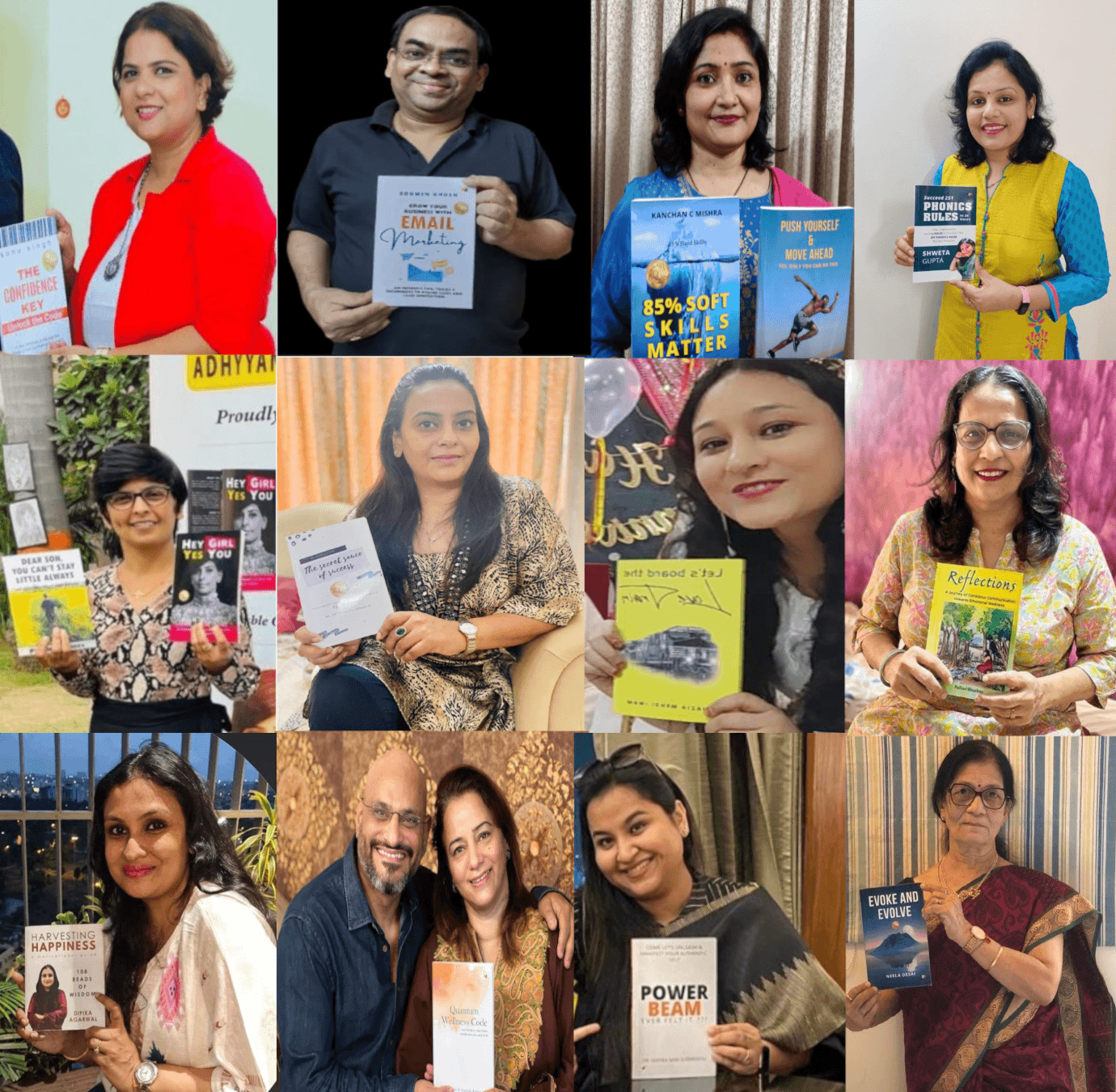
📘 Over 100 more case studies like these...
We Have Been Featured In..
 Unlock all case studies

All Case Studies

Followers
11000+

Followers
8439

Subscribers
11100+

Groups
500+
LAXIMUS BUSINESS VENTURES PRIVATE LIMITED