contact@adhyyanbooks.com | +91-9986728203









All Case Studies

LAXIMUS BUSINESS VENTURES PRIVATE LIMITED
Mind Over Matter: How One Psychologist Transformed Complex Mental Wellness Concepts Into Life-Changing Wisdom
NON-FICTION
GENRE
129
NO. OF PAGES
Paperback
BINDING
Introduction: The Bridge Between Science and Everyday Life
In today's fast-paced world where mental health challenges are rising, many struggle to find practical guidance that actually works. Enter Naazin Haseeb, a visionary who saw beyond the complex language of psychology to what people truly needed—clear, actionable advice for better decision-making and mental wellness.
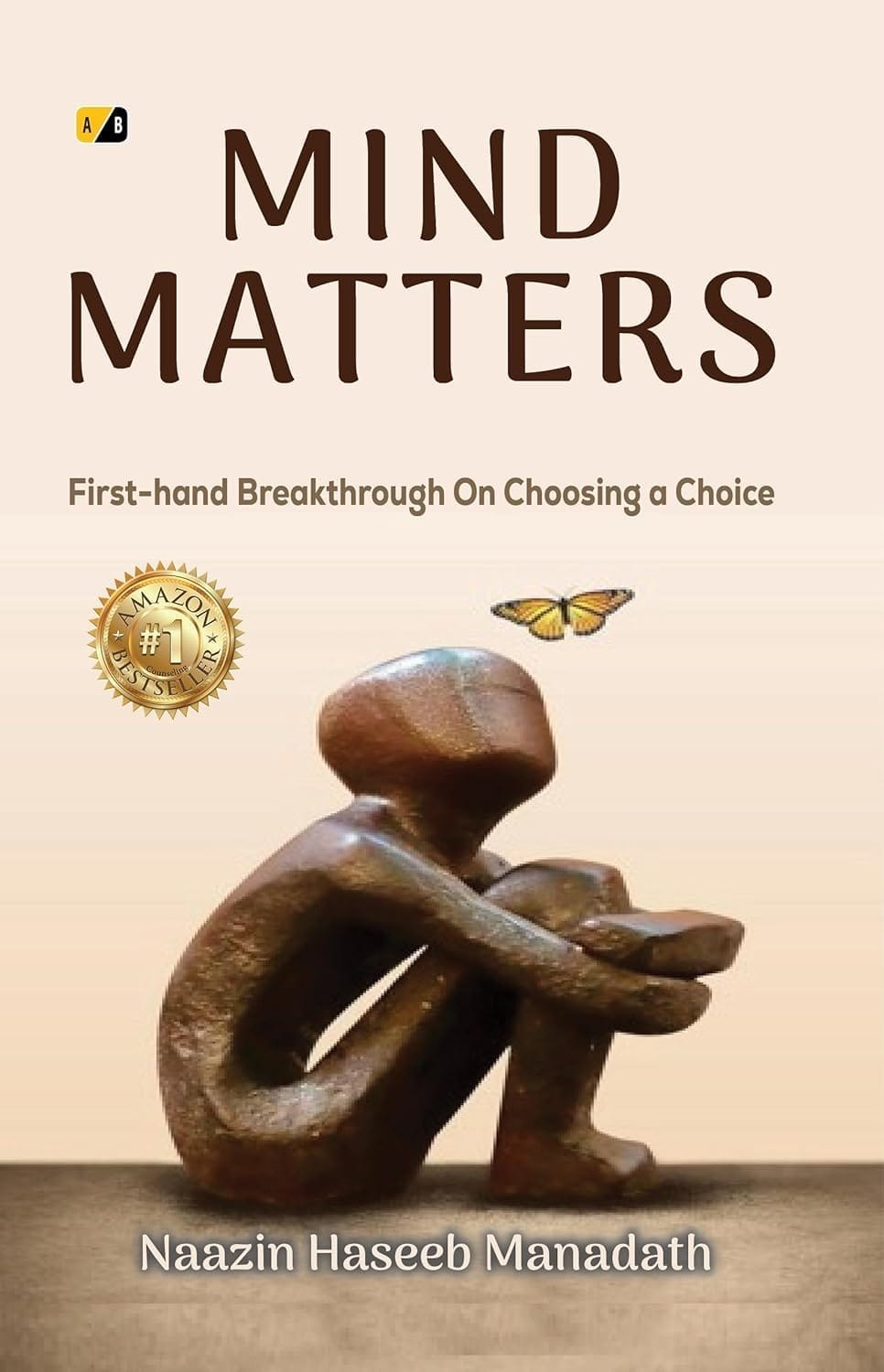
Her groundbreaking book, "Mind Matters: First-hand Breakthrough On Choosing a Choice," isn't just another self-help title. It represents a passionate mission to translate scientific knowledge into everyday wisdom that anyone can apply, regardless of their background.
"It's my giveaway to society, how you can build a beautiful future," Haseeb explains, her voice filled with genuine care for those seeking better mental health solutions.
What makes her approach unique is how she breaks down intimidating psychological concepts into simple tools that readers can immediately apply to their lives. This isn't about temporary fixes—it's about lasting transformation through understanding how our minds actually work.
Throughout her 267-page non-fiction journey, Haseeb guides readers through the fascinating world of decision-making psychology, consciousness levels, and practical exercises that literally reshape your brain. She doesn't just tell you what to do—she shows you how to think differently.
ACTION STEP:
Identify one area of your mental wellness that feels "too complicated" to address. Write it down clearly. This simple act of naming what challenges you is your first step toward understanding it. Remember: what can be named can be tamed. Your journey toward better mental health begins with acknowledging where you currently stand.
The Pre-Author Life: Building a Foundation of Diverse Experience
Long before putting pen to paper, Naazin Haseeb was quietly gathering the unique combination of experiences that would eventually fuel her insights. Her path wasn't linear—it was rich with diverse roles that each contributed valuable perspective to her understanding of how minds work.
"From very young age, school days and college time, magazines and school magazines... teachers would encourage us to write an article for the magazine and that's how I started," she recalls, tracing her writing journey back to those early creative sparks.
Her professional evolution reads like a masterclass in understanding the human mind from multiple angles:
As a therapeutic engineer, she learned the clinical aspects of mental processes
Her time as an early years educator revealed how thinking patterns form from childhood
Working as a corporate trainer taught her how mental habits impact professional success
Her practice as a mindfulness coach connected theory with daily living
As an entrepreneur, she witnessed firsthand how decision-making affects real-world outcomes
This wasn't just career-hopping—it was deliberate skill-building. Each role added another layer to her understanding of how minds function under different circumstances and challenges.
Her academic foundation in psychology provided the scientific framework, while her diverse professional experiences gave her insight into how these concepts play out in real life. This combination proved invaluable when translating complex ideas into practical guidance.
Literary influences also shaped her approach. "Inspiration would be Hugo Saki, who is a creative writer. I love his plays, I love his short stories and poems. It's been always an inspiration actually," she shares, highlighting how creative writing techniques helped her make psychological concepts more relatable.
Perhaps most importantly, Haseeb benefited from unwavering family support—particularly from her father. "My father was the one who was behind my back. He would go for the book, complete the book," she remembers gratefully. This foundation of encouragement created the safety net that allowed her to take creative risks.
ACTION STEP:
Take inventory of your own diverse experiences. List skills from different areas of your life—professional, educational, creative—that might combine in unique ways. Don't dismiss any experience as irrelevant. Often our most valuable insights come from connecting seemingly unrelated knowledge areas. Consider keeping a "skills journal" where you document what each new experience teaches you about yourself and others.
The Trigger Point: Recognizing a Critical Gap
Every meaningful journey has a defining moment—that instant when purpose becomes crystal clear. For Naazin Haseeb, this clarity emerged gradually through countless therapy sessions and training workshops where she noticed the same questions arising repeatedly.
People were struggling not because psychological solutions didn't exist, but because these solutions weren't accessible. The gap between scientific understanding and practical application was leaving too many people without the help they needed.
"When I came to my master's degree and started doing my coursing, training, counseling, I always encountered many questions. And to answer them all, I thought, let me write a book," she explains. This wasn't just about sharing information—it was about translating complex concepts into language that could actually change lives.
What drove her forward was seeing firsthand how people struggled with decisions both big and small. From career choices to relationship issues, the underlying problem was often the same: people lacked the tools to understand their own thinking processes.
Her research approach reflected this practical focus:
She carefully documented common challenges from client consultations
Professional discussions with colleagues helped identify patterns
Academic research provided the scientific backing
Practical testing ensured her solutions actually worked in real life
Experience documentation created a valuable database of case studies
"It's been almost one and a half month, six months, or I don't know, one plus years, I have worked on this neurobics, finding out how well it is good to adapt in your life," she explains about her thorough research process that left no stone unturned.
This commitment to rigorous testing meant that every concept in her book wasn't just theoretically sound—it was proven effective through real-world application. This blend of scientific validity and practical usefulness would become the hallmark of her approach.
ACTION STEP:
Pay attention to recurring challenges in your life or work. When you notice a problem that keeps appearing, don't just solve it temporarily—document it and look for the underlying patterns. Ask yourself: "What fundamental skill or understanding might be missing here?" Often, a persistent problem signals an opportunity for meaningful growth or innovation. Create a simple system to track these patterns, perhaps through a weekly review of challenges you've faced.
Choosing the Topics: Making the Complex Accessible
With a wealth of psychological knowledge at her disposal, Haseeb faced a crucial challenge: determining which concepts would provide the most practical value to readers. Rather than overwhelming her audience with everything she knew, she carefully selected topics that addressed the root causes of common struggles.
"Mind is very much intangible... it's an intricate fabric of all of our human emotions, which is constructed sophisticatedly," she describes. This understanding led her to focus on making these invisible processes visible and manageable.
Her book structure reflects this thoughtful approach, organizing content around key decision-making abilities:
Intelligence Quotient (IQ): Our capacity for logical reasoning and problem-solving
Emotional Quotient (EQ): Our ability to understand and manage emotions
Adaptive Quotient (AQ): Our flexibility in changing circumstances—the often overlooked but critical component
"We have three phases of decision making... When you are high in AQ, this is the best way to take a decision in life," she explains, highlighting how adaptability often determines success more than raw intelligence or emotional awareness.
What makes her approach unique is how she connects these abstract concepts to everyday situations. Rather than presenting them as academic theories, she shows how they influence daily choices about relationships, career moves, health decisions, and personal growth opportunities.
By focusing on decision-making psychology, consciousness levels, neuroplasticity exercises, mental flexibility, and adaptive quotient development, Haseeb created a comprehensive toolkit for mental wellness that readers could immediately apply to their most pressing challenges.
This careful selection process ensured that her book wasn't just interesting—it was transformative. Each topic served as a building block toward better mental wellness and more effective decision-making.
ACTION STEP:
Assess your own decision-making process by rating yourself on the three quotients Haseeb identifies: IQ (logical thinking), EQ (emotional awareness), and AQ (adaptability). On a scale of 1-10, where do you stand in each area? Most people discover they're stronger in one or two areas but weaker in another. This awareness alone can transform how you approach challenges. For one week, when facing decisions, consciously engage your least-developed quotient first.
Publishing Journey: Bringing Wisdom to Life
Transforming profound psychological insights into accessible reading wasn't just about writing—it was about creating an experience that could genuinely change readers' mental processes. Haseeb approached this challenge with the same thoughtfulness that characterized her research.
Her development process integrated multiple knowledge streams:
Client interactions provided real-world examples of mental challenges
Professional experience informed practical solutions
Academic knowledge ensured scientific accuracy
Practical applications kept the content grounded in reality
Case studies illustrated concepts through relatable stories
What truly distinguished her approach was her writing style. Rather than adopting the formal tone of academic psychology, she chose language that welcomed readers of all backgrounds. Complex concepts were explained through everyday examples, making the invisible workings of the mind suddenly visible and manageable.
"Try dancing and doing brushing your teeth or having your food blindfolded to experience the whole taste... This is called neuroplasticity. You are using all your senses to experience anything," she shares as an example of the practical exercises included in her book.
These "neurobics"—neurological aerobics—represent the heart of her approach. Rather than just explaining how the brain works, she provides simple activities that literally create new neural pathways. This focus on practical application transforms reading from a passive activity into an active growth process.
Throughout the writing process, Haseeb remained committed to verification. Every concept, exercise, and recommendation was tested to ensure it delivered the promised benefits. This rigor meant readers could trust that the practices would actually improve their mental wellness when applied consistently.
The resulting book strikes a rare balance between accessibility and depth—simple enough for anyone to understand but substantive enough to create lasting change.
ACTION STEP:
Try one of Haseeb's "neurobic" exercises today: brush your teeth with your non-dominant hand, eat a meal blindfolded, or take a different route to work. Notice how this small change makes your brain more alert and engaged. These simple pattern disruptions build cognitive flexibility over time. Challenge yourself to try one new neurobic exercise each day for a week and journal about how it affects your thinking and awareness.

Marketing and Branding: Education as Outreach
Haseeb understood that writing a valuable book was only half the journey—helping it reach those who needed it most was equally important. Her approach to sharing her work reflected the same caring attitude that inspired the writing itself.
Rather than focusing solely on sales numbers, she created a multifaceted education platform:
Her YouTube channel serves as an extension of the book's teachings
Social media presence reinforces key concepts in bite-sized formats
Professional networks help spread awareness among fellow practitioners
Educational sessions bring the concepts to life through direct interaction
Client interactions provide ongoing feedback for refinement
"My YouTube channel is all about education. I started doing in 2019... I use this as a vessel for motivating them to improve their self-esteem and make them believe that they can do it," she explains about her comprehensive approach to sharing knowledge.
This educational strategy includes:
Informative videos explaining psychological concepts in simple terms
Motivational content encouraging viewers to apply what they learn
Practical demonstrations of exercises and techniques
Success stories highlighting real transformations
Implementation guides showing step-by-step applications
What makes this approach particularly effective is how it meets people where they are—offering multiple entry points to her wisdom regardless of learning style or prior knowledge. Visual learners might connect through videos, while others might prefer the depth of the book or the interaction of live sessions.
By focusing on education rather than traditional marketing, Haseeb creates a community of practice around her work. Readers don't just consume content—they actively engage with it, support each other, and share their experiences. This creates a multiplier effect where each reader potentially influences many others.
ACTION STEP:
Choose one mental wellness concept you've learned that has helped you, and commit to sharing it with three people this week. This might be through a conversation, a social media post, or recommending a resource. Teaching something reinforces your own understanding while creating a ripple effect of positive impact. Remember that sharing knowledge is one of the most meaningful ways to contribute to others' wellbeing.
The Business Impact: Measuring Transformation
Success in the field of mental wellness looks different than in many other industries. While book sales matter, the true measure of impact lies in changed lives and improved mental health. Haseeb approaches this evaluation with the same thoughtfulness that characterizes all her work.
Her impact spans multiple areas:
Deeper understanding of mental wellness concepts
Improved decision-making abilities among readers
Neuroplasticity development leading to more flexible thinking
Personal growth as reported by readers
Enhanced adaptive capabilities in challenging situations
"People would be so accepting... they would be eagerly waiting to hear this book," she shares about the enthusiastic early response that confirmed she was addressing a real need.
What makes her work particularly valuable is how it empowers readers to become active participants in their own mental wellness. Rather than creating dependency on a therapist or coach, her approach gives people tools they can apply independently throughout their lives.
The business impact extends beyond individual readers to organizations and communities. As people improve their decision-making abilities and mental flexibility, this naturally affects their workplaces, families, and social circles. One person's improved adaptability can positively influence countless interactions and outcomes.
This ripple effect represents the ultimate business success—creating value that continues to multiply long after the initial transaction. By focusing on genuine transformation rather than quick fixes, Haseeb builds lasting credibility that supports continued growth.
Her measurement approach considers multiple indicators:
Direct reader feedback about applied techniques
Implementation success stories
Documented behavioral changes
Mindset transformations as evidenced in decision-making
Community growth around her teaching principles
ACTION STEP:
Start tracking your mental wellness progress using measurable indicators. Create a simple weekly check-in where you rate your decision-making confidence, mental flexibility, and overall wellbeing on a 1-10 scale. Add notes about specific challenges you faced and how you applied new mental skills. Over time, this personal data will reveal patterns and progress that might otherwise go unnoticed. Remember that what gets measured improves more quickly.
Final Advice for Aspiring Authors: Creating with Purpose
Drawing from her journey of transforming specialized knowledge into accessible wisdom, Haseeb offers guidance that blends thorough preparation with authentic connection:
"Talk to people, discuss the content with others... Once you're done with the manuscripts and everything, go to a publisher... Book is going to be your identity," she advises, emphasizing that writing is fundamentally about communication rather than isolation.
Her approach highlights several core principles:
Thorough research creates a solid foundation
Topic discussion with diverse individuals improves clarity
Content organization through mind mapping prevents overwhelm
Complete preparation before publishing ensures quality
Understanding that your book becomes your professional identity
What distinguishes her advice is the emphasis on both rigorous preparation and human connection. She recognizes that meaningful writing emerges from the intersection of careful research and genuine engagement with others' needs and perspectives.
For those considering sharing their knowledge through writing, Haseeb's journey offers a valuable roadmap. It demonstrates that specialized expertise becomes most powerful when translated into language that connects rather than impresses—when complex ideas are made accessible without being oversimplified.
The most important aspect of her guidance is the reminder that writing with purpose transcends mere self-expression. It's about creating something that genuinely serves others while honoring the depth of your knowledge and experience.
ACTION STEP:
If you have specialized knowledge that could help others, start a "translation journal." Each week, take one complex concept from your field and practice explaining it three different ways: 1) to a 10-year-old child, 2) to someone with no background in your field, and 3) through a relatable metaphor or story. This practice builds the critical skill of making valuable knowledge accessible to those who need it most.
Conclusion: Wisdom in Action
Naazin Haseeb's journey from mental wellness professional to influential author demonstrates the remarkable power of bridging specialized knowledge with everyday application. Her success proves that expertise reaches its full potential not when it's locked in academic language, but when it's translated into wisdom that anyone can use.
"Practice neurobics and live a beautiful, mindful life," she concludes, reinforcing that the ultimate goal is not just understanding but application—not just knowledge but transformation.
What makes her story particularly inspiring is how it represents a different kind of success. Beyond sales figures or academic recognition, her impact lies in countless improved decisions, reduced anxiety, better relationships, and healthier minds—outcomes that don't appear on balance sheets but profoundly matter in human lives.
Her continued journey reflects this same commitment: "I do have future plans and I'm still jotting down all the points. And it's in line," she shares about her ongoing writing projects that will further expand her contribution.
The true measure of her success includes:
Readers who report meaningful changes in their thinking patterns
Successful implementation of her techniques in daily life
Documented behavioral changes that improve quality of life
Transformations in how people approach challenges
Growing communities of practice around her principles
Haseeb's story reminds us that in a world of increasing complexity and mental health challenges, making psychological wisdom accessible isn't just helpful—it's essential. By transforming intricate concepts into practical tools, she exemplifies how specialized knowledge can become democratic wisdom that serves everyone.
Her journey continues to inspire not just those interested in psychology, but anyone committed to making complicated but valuable knowledge accessible to those who need it most.
ACTION STEP:
Commit to a 30-day "neurobic challenge" by implementing one new mental flexibility exercise each day. This might include using your non-dominant hand, taking new routes, engaging different senses, or attempting unfamiliar mental tasks. Keep a simple log of what you try and what you notice. After 30 days, reflect on how these small daily practices have affected your overall thinking patterns, stress levels, and decision-making abilities. Remember that neuroplasticity is built through consistent practice rather than occasional effort.

Annual Membership Regular
Price Rs. 9980/-
(One-Time-Offer Only ₹499/-)
Unlock the secrets of Bestselling Authors
📘 Over 100 more case studies like these...
We Have Been Featured In..
 Unlock all case studies

All Case Studies

Followers
11000+

Followers
8439

Subscribers
11100+

Groups
500+
LAXIMUS BUSINESS VENTURES PRIVATE LIMITED