contact@adhyyanbooks.com | +91-9986728203









All Case Studies

LAXIMUS BUSINESS VENTURES PRIVATE LIMITED
From Entrepreneur to Author: Promoting Emotional Intelligence for Success

Gomteshwar Jain
NON-FICTION
GENRE
267
NO. OF PAGES
Paperback
BINDING
Introduction
In a business landscape where technical skills and knowledge often receive the most attention, Gomteshwar Jain has emerged as an advocate for the critical but frequently overlooked role of emotional intelligence in achieving success. His book, "The EQ Blueprint," represents the culmination of two decades of entrepreneurial experience across international markets, combined with formal training in psychology and human resources, offering readers practical insights into developing emotional quotient (EQ) as a foundation for personal and professional achievement.
"Over the years I've realized that, the most successful people in the world, they were very much emotionally stable. They had a high, they were emotionally intelligent people. Their EQ was very high," Jain explains about the core observation that drove his exploration of emotional intelligence.
Through his extensive entrepreneurial experience and global travels, Jain identified several key components that inform his understanding of emotional intelligence and its impact on success:
Key Development Areas:
Building self-awareness and emotional stability
Developing effective interpersonal relationships
Managing stress in high-pressure business environments
Navigating cross-cultural emotional dynamics
Leveraging emotional intelligence for leadership
Current Challenges:
1. Professional Success Barriers
Overemphasis on technical skills (IQ) over emotional competence
Relationship difficulties limiting career advancement
Communication breakdowns due to emotional mismanagement
Decision-making impaired by poor emotional regulation
Leadership ineffectiveness stemming from low EQ
2. Personal Fulfillment Obstacles
Relationship strain affecting overall happiness
Internal emotional struggles limiting life satisfaction
Stress management challenges affecting wellbeing
Cultural disconnections in an increasingly global society
Work-life balance difficulties affecting personal happiness
"High IQ is not enough for you to get success in life. High EQ is an essential aspect for you to get success in life, your social circle, anywhere if you are emotionally intelligent then it guarantees you success in life," Jain emphasizes about the crucial distinction between intellectual and emotional intelligence.

The Pre-Author Life
Before venturing into writing, Gomteshwar Jain built a distinguished career as a serial entrepreneur, establishing and successfully managing multiple businesses over two decades. "I'm an engineer and an MBA. And then I've been an inter-serial entrepreneur for the past 20 years. So I have two, three companies, which I'm successfully managing right now," he shares about his professional background.
His educational foundation combines technical training with specific focus on human psychology: "During my MBA time also, I had a psychology major in MBA, in HR. So I have always been interested in that." This unique blend of technical and psychological education provided him with a distinctive lens through which to view business success and human performance.
This diverse experience was further enriched by extensive global exposure:
Professional Development:
Engineering and MBA education with psychology specialization
Twenty years of serial entrepreneurship
Establishment of multiple successful companies
Professional psychology certifications
Extensive global business experience
International Exposure:
1. Global Perspective
Travel to 29 countries worldwide
Diverse cultural interactions and observations
Cross-cultural business negotiations
International market adaptation
Global networking and relationship building
2. Observational Learning
First-hand witness to entrepreneurial challenges
Study of emotional factors in business success
Analysis of cultural variations in emotional expression
Recognition of universal EQ principles across cultures
Practical application of emotional intelligence in diverse settings
"I have actually traveled a lot around the world. So 29 countries I've traveled to and around India also. So I met people from different cultures, different backgrounds," he explains about the global perspective that informs his understanding of emotional intelligence as a universal success factor.
His early environment also played a crucial role in shaping his intellectual curiosity: "I'm from a family of educationists. Both my parents were from the field of education. My father was a lecturer and then he opened his own school. So we have our own school also... There were always a lot of books, there were talks of education and all."
"High IQ is not enough for you to get success in life. High EQ is an essential aspect for you to get success in life"
The Trigger Point
The decision to write "The EQ Blueprint" emerged from Jain's long-held desire to become an author, combined with his recognition of emotional intelligence as a critical yet underappreciated factor in both business and personal success. His observations of emotional intelligence's impact across diverse settings crystallized into a compelling message he felt compelled to share.
"I always wanted to be an author from the past many years," he explains about his long-standing literary ambition, which took a significant step forward in 2016 or 2017 when he attended a workshop for aspiring authors organized by Adhyan Books. This formal introduction to the publishing process provided the framework he needed to begin transforming his insights into a structured book.
The book's development followed a deliberate, methodical process:
Research Approach:
One year of dedicated research and content gathering
Integration of personal entrepreneurial experiences
Synthesis of formal psychological education
Analysis of observed emotional patterns in successful people
Creation of a structured blueprint for emotional intelligence development
Content Development:
1. Conceptual Organization
Identifying key emotional intelligence components
Developing practical application frameworks
Creating accessible explanations of psychological concepts
Organizing content into logical progression
Balancing theory with real-world examples
2. Refinement Process
Multiple rounds of content review and improvement
Structural editing for clarity and impact
Distillation of complex concepts into accessible language
Integration of personal anecdotes and observations
Crafting a cohesive narrative around emotional intelligence
"Since you know this book took me around one one year to complete for one year you know I was researching on the subject finding you know topics from everywhere what all topics I can include in the book and all so took about one year of research," he shares about the deliberate development process.
The integration of personal experience was essential to the book's authenticity: "While I was writing that book so I had to recall all my experiences...how I have managed my way out to my emotional intelligence and how I have seen others doing the same in difficult situations, how they use their emotions, how they use their EQ, high EQ to get out of the situation, get the best out of it."
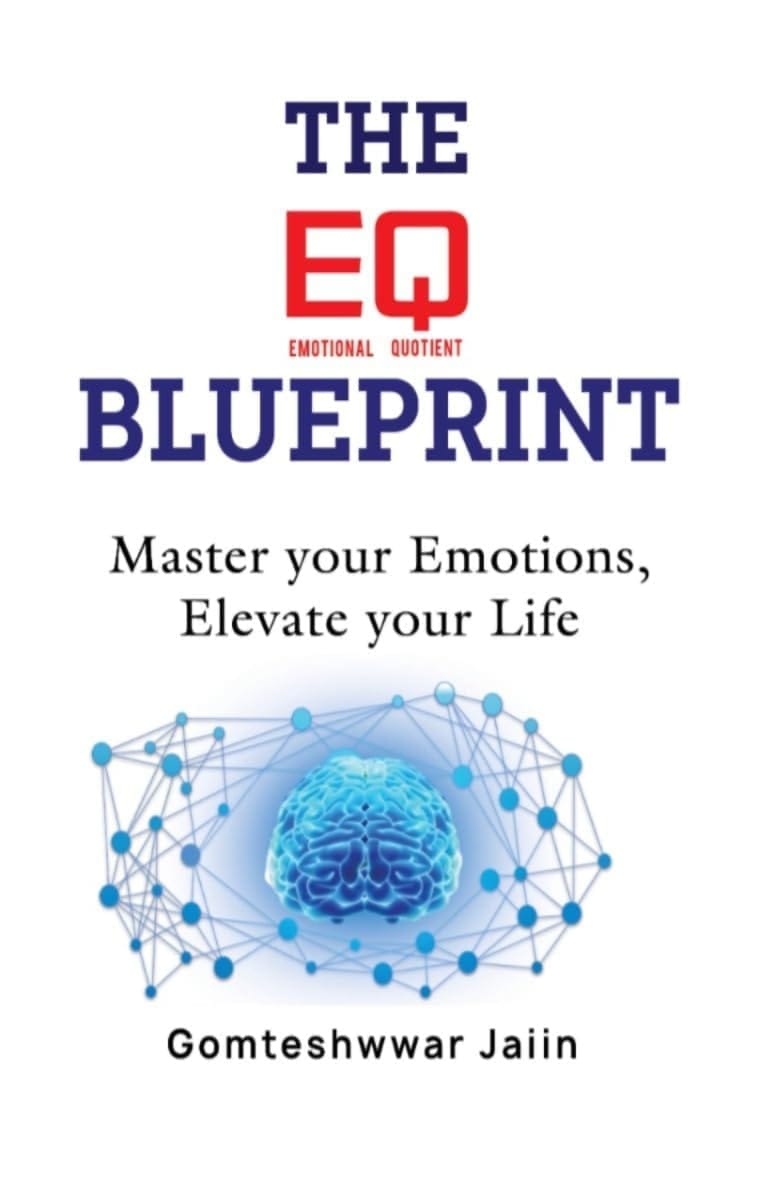

Choosing the Topics
Gomteshwar Jain's selection of emotional intelligence as the focus for "The EQ Blueprint" reflects his observation of its universal impact across diverse business contexts and cultures. His choice was guided by both personal interest in psychology and strategic recognition of emotional intelligence as an undervalued component of success.
"The most important one is the one I told you that you know if you have to be successful in life then you must have high EQ you should be an emotionally intelligent person," he emphasizes about the core message that drives his book's content.
This focus addresses a critical gap in business and personal development literature that often emphasizes technical skills over emotional competence:
Core Content Areas:
Emotional self-awareness and regulation
Interpersonal relationship management
Stress response and emotional resilience
Cross-cultural emotional intelligence
Emotional leadership in business contexts
Book Structure Elements:
Conceptual Framework
Defining emotional intelligence components
Distinguishing between IQ and EQ contributions to success
Explaining psychological foundations of emotional intelligence
Demonstrating EQ application in varied contexts
Creating practical development frameworks
Practical Applications
Business leadership and management
Personal relationship enhancement
Cross-cultural communication
Stress management and resilience
Decision-making and problem-solving
"If a person is not emotionally intelligent he will lose in personal life relationship will suffer, his own happiness will suffer," Jain explains about the personal consequences of underdeveloped emotional intelligence, before adding, "And in professional life also, he will not be able to make advancement in maybe job or business or whatever."
His strategic positioning of the book emphasizes the universal applicability of emotional intelligence: "When you're dealing with people, to get the best out of the people, to get the best out of the situations, you have to be emotionally intelligent. The person who has high EQ so they can deal best with the people around them. That's why they are successful."
Publishing Journey
The transition from entrepreneur to author presented unique challenges that Jain navigated while maintaining his demanding business responsibilities. The writing process for "The EQ Blueprint" required balancing creativity with discipline, particularly given his extensive travel schedule and business commitments.
"My busy schedule, so that was a little challenging. Because you know, to manage my busy schedule and then writing a book, it was a little challenging, but I enjoyed it," he shares about the primary obstacle he faced during the writing process.
The development process involved several adaptations to accommodate his business responsibilities:
Writing Process:
Mobile note-taking and voice recording during travel
Flexible writing schedule accommodating business priorities
Non-linear content development approach
Digital tools for capturing insights on the go
Periodic focused writing sessions when available
Scheduling Challenges:
1. Travel Management
International business travel interrupting writing flow
Time zone adjustments affecting creative periods
Cultural observations adding content during travel
Mobile writing strategies during transit periods
Maximizing productivity during stationary periods
2. Creative Continuity
Managing thought disruptions during breaks
Reconnecting with narrative flow after interruptions
Maintaining consistent voice despite intermittent writing
Preserving thematic coherence across writing sessions
Balancing fresh insights with established content structure
"The thing is I travel a lot for my business. So managing the business and then the travel schedules also, you know. So you get little time," he explains about the specific challenges of writing while maintaining international business commitments.
These interruptions created particular challenges for maintaining narrative cohesion: "When you're writing a book, okay, so your thought process is in one direction, you know. And then you take a break. So that thought process, you know, there's a break in that thought process, okay. So then you have to again align yourself with that thought process and then start again."
Despite these challenges, Jain developed effective strategies for capturing ideas wherever he was: "I used to record a message in my phone, you know, a voice message. So later that I used to later than I used to write it in the book, you know. So there was no time for nothing. Whenever I got time, whenever I got an idea, I wrote that."
" suggesting that meaningful impact remains his primary goal rather than commercial success"
Marketing and Branding
Jain's approach to sharing "The EQ Blueprint" leverages contemporary digital platforms while emphasizing the book's role in establishing his authority in the emotional intelligence domain. As a business owner, he brings a strategic perspective to book marketing that balances commercial considerations with professional positioning.
"As of today, the most economical and most effective way of advertising is social media. I will be marketing my book very soon," he shares about his planned promotional approach, demonstrating pragmatic understanding of modern publishing realities.
His marketing strategy focuses on digital engagement and professional positioning:
Distribution Channels:
Social media platform utilization
LinkedIn professional network leverage
Instagram visual content marketing
Video-based content creation about the book
Integration with professional speaking engagements
Positioning Strategy:
1. Professional Authority Building
Establishing expertise in emotional intelligence
Supporting speaking and training opportunities
Enhancing professional credibility
Creating foundation for future publications
Positioning for consulting opportunities
2. Content Marketing Approach
Creating video content highlighting key concepts
Developing shareable insights from the book
Building audience through valuable free content
Creating engagement through application examples
Cross-platform content distribution
"Second is the topic about which you have written a book so you know it makes you an authority in that field," he explains about the professional positioning value beyond direct book sales, adding, "If I am giving a lecture there or I'm giving some session there, okay, I can mention that I was at one book or two books, you know, then I can claim myself to be an authority in that field."
His marketing approach leverages digital tools while maintaining focus on the book's core message: "I'll start making videos about the book and I'll start posting on Instagram and all okay on LinkedIn Instagram on all social medias I think that's the best way to market a book."
"The biggest achievement is my personal satisfaction. That personal satisfaction is most important you know"
The Business Impact
Beyond commercial success, Jain's work with "The EQ Blueprint" creates meaningful impact by addressing a critical aspect of personal and professional development that receives insufficient attention. While the book had just been published at the time of the interview, the potential for significant influence on readers spans multiple domains.
"The biggest achievement is my personal satisfaction. That personal satisfaction is most important you know," he shares about his primary measure of success, indicating values that transcend purely commercial metrics.
The impact extends beyond individual readers to influence broader professional discourse:
Impact Areas:
Personal relationship enhancement
Professional advancement strategies
Leadership development frameworks
Cross-cultural business communication
Stress management and emotional resilience
Application Domains:
1. Individual Development
Self-awareness improvement
Emotional regulation techniques
Relationship management skills
Stress resilience building
Decision-making enhancement through emotional awareness
2. Business Application
Leadership effectiveness improvement
Team dynamics optimization
Client relationship enhancement
Negotiation effectiveness
Workplace culture development
"If you know I am not keen to only how many copies it will sell or this or that or I will get a good branding about it you know that are secondary," he explains, emphasizing his focus on meaningful impact over commercial metrics.
The book also serves as a foundation for further writing and speaking on related topics: "Now one book is complete, okay, so I am now motivated to write another one also. Yeah. And I think this process will now go on because, you know, so I am just searching for, I have a few topics in my mind."
His next project will explore relationship dynamics, further extending the emotional intelligence focus: "I plan to work on the relationships... So they are also related to emotions only emotional interventions only so I want to write something on relationship."
"High EQ is an essential aspect for you to get success in life, your social circle, anywhere if you are emotionally intelligent then it guarantees you success in life"
Final Advice for Aspiring Authors
Drawing from his journey creating "The EQ Blueprint," Jain offers guidance that emphasizes action over perfectionism, particularly for those hesitant to begin their writing journey due to concerns about producing ideal content.
"I would request them to just start. You know people wait for the right moment, they wait for the right idea. Doesn't matter anything, you just start," he advises, highlighting the importance of initiating the writing process rather than waiting for perfect circumstances.
His guidance for aspiring authors includes:
Core Principles:
Starting without waiting for perfect conditions
Setting firm deadlines for completion
Accepting imperfection as part of the process
Recognizing the value in even imperfect work
Building momentum through consistent action
Writing Approach:
1. Practical Process
Beginning without overthinking
Writing whatever comes to mind initially
Refining content through subsequent iterations
Prioritizing completion over perfection
Setting clear timeframes for project milestones
2. Block Management
Stepping away during creative blocks
Changing activities when stuck
Avoiding forced writing during unproductive periods
Returning with fresh perspective after breaks
Trusting the natural creative process
"We want to write something awesome. We want to create something awesome all the time. That can never happen, you know?" he explains about the paralyzing effect of perfectionism, adding, "Even if you're not getting the best out of you, it may be best for someone else who is reading it."
His experience with writer's block informed practical advice: "Whenever I used to feel like that so at that point of time I used to stop writing. I was just starting something else," he explains, adding, "If I was putting pressure on my mind to bring something out it never happened so I left it there itself and then maybe the next day or after four five hours...automatically something good came from my mind."
Conclusion
Gomteshwar Jain's journey from entrepreneur to author demonstrates how professional experience combined with formal education can translate into valuable guidance for others. His book "The EQ Blueprint" serves as both a practical guide to emotional intelligence development and a reflection of his observation that EQ often distinguishes truly successful individuals across business and personal contexts.
"High EQ is an essential aspect for you to get success in life, your social circle, anywhere if you are emotionally intelligent then it guarantees you success in life," he emphasizes about the central message that drives his work—a theme that remains relevant across professional fields, cultural contexts, and personal circumstances.
The book's significance lies in its practical approach to a psychological concept that many recognize as important but struggle to develop: "When you're dealing with people, to get the best out of the people, to get the best out of the situations, you have to be emotionally intelligent." This straightforward yet profound message offers potential for meaningful impact across various life domains.
His plans for future books exploring relationship dynamics suggest that "The EQ Blueprint" represents not just a standalone work but the beginning of a more comprehensive exploration of emotional intelligence in different contexts. By approaching writing as one extension of his professional expertise, Jain models the integration of business acumen with knowledge sharing.
The journey from entrepreneur to published author has equipped him with valuable insights about the creative process itself, insights he freely shares with others beginning their own writing journeys: "Most important thing is, when they start writing a book, they should definitely put a deadline to it, then when they're going to finish it. If the deadline is there, then they'll be able to do it in time." This emphasis on practical execution reflects the same business mindset that has contributed to his entrepreneurial success.

Annual Membership Regular
Price Rs. 9980/-
(One-Time-Offer Only ₹499/-)
Unlock the secrets of Bestselling Authors
📘 Over 100 more case studies like these...
We Have Been Featured In..
 Unlock all case studies

All Case Studies

Followers
11000+

Followers
8439

Subscribers
11100+

Groups
500+
LAXIMUS BUSINESS VENTURES PRIVATE LIMITED