contact@adhyyanbooks.com | +91-9986728203









All Case Studies

LAXIMUS BUSINESS VENTURES PRIVATE LIMITED
From Academician to Storyteller: The Publishing Journey of a Multifaceted Author

Dr. Prashant Pareek
Author of 'Legacy & Logo: The Art of Branding in Indian Family Businesses'
NON-FICTION
GENRE
152
NO. OF PAGES
Paperback
BINDING
Introduction
In the dynamic world of publishing, Prashant's journey stands out as a remarkable tale of transformation and passion. An associate professor at a business school in Ahmedabad, he has published seven books over nine years, each a unique exploration of his diverse interests.
His writing journey is anything but conventional. Spanning domains from dairy sector economics to Indian mythology, from business lessons to spiritual narratives, Prashant's books reflect a deep-seated curiosity and a commitment to sharing meaningful insights. What distinguishes him is not just his ability to write, but his approach to writing – each book is a carefully curated exploration of a subject that has deeply resonated with him.
Unlike authors chasing market trends, Prashant's writing emerges organically from his life experiences, professional interactions, and intellectual pursuits. His work demonstrates that true authorship is about sharing knowledge, personal perspectives, and unique insights.
From his initial project with the Department of Science and Technology to his later books on Shiva Mahapurana and Krishna's narratives, Prashant has consistently shown that writing is a powerful medium of personal and professional expression. His journey challenges conventional notions of authorship, proving that a book is more than a product – it's a vehicle for knowledge transmission and intellectual exploration.
As we delve into his story, we'll uncover the motivations, strategies, and triumphs that have defined his remarkable transformation from an academician to a multifaceted author who has successfully bridged multiple domains through the power of storytelling.
The Pre-Author Life
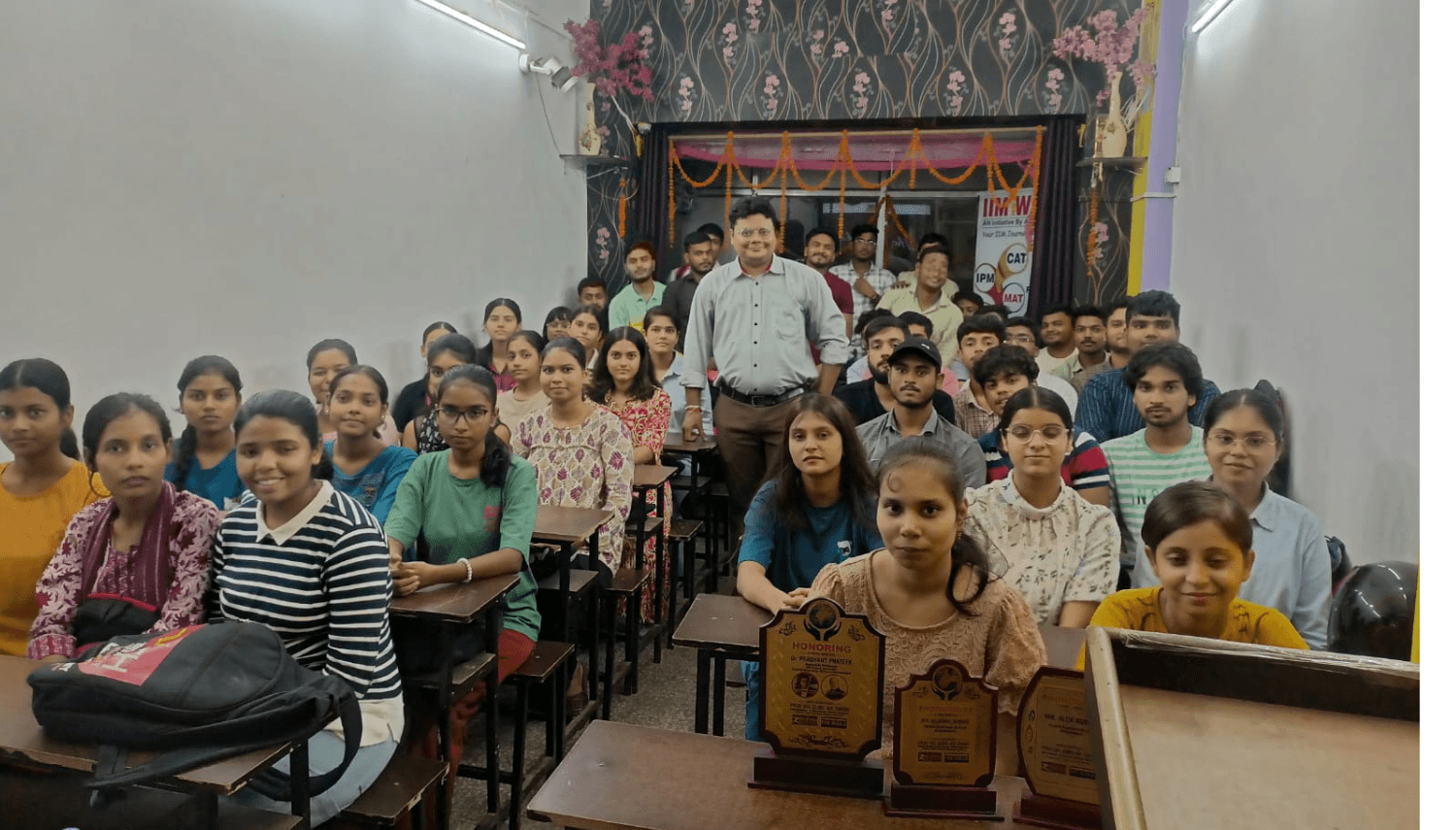
Prashant's professional journey began in media, working with the Danny Baskar group before transitioning into academia. Since 2012, he has been an academician, currently serving as an associate professor at a business school in Ahmedabad.
His academic background provided a unique perspective that would later support his writing endeavors. More than just classroom teaching, Prashant was deeply interested in understanding how people acquire knowledge and skills. He developed a teaching style that bridged theoretical knowledge with practical application – a philosophy that would later define his approach to writing.
A pivotal moment came through a project with the Department of Science and Technology, Government of India. This assignment took him to 150 villages in Gujarat, where he discovered the story of the Amul brand. What began as a professional research project would soon transform into his first book – a 100-page exploration of the dairy sector and village life.
During these years, Prashant was quietly accumulating a wealth of knowledge and experiences. His media background, academic training, and field research created a unique perspective waiting to be shared. He wasn't just collecting information, but developing a holistic understanding of storytelling as a medium of knowledge transmission.
The transition from media to academia was deliberate, driven by a passion for learning and sharing knowledge. Working with various teams and participating in learning initiatives gave him insights into knowledge creation and dissemination – skills that would prove invaluable in his future writing career.
"I worked with Danny Baskar group for a while and then became an academician. I have been an academician for 13 years and now I am associated with a business school in Ahmedabad as an associate professor."
The Trigger Point
The decision to write was not a calculated career move, but a spontaneous response to his experiences. After his project in Gujarat, Prashant felt compelled to share his learnings. "I thought of publishing my learnings in a book form," he recalls. "It should not be a big book, but a book where the reader should get information about the dairy sector of Gujarat and the village life."
This initial experience opened up new literary avenues. Driven by his interests in Indian mythology and storytelling, he began exploring diverse topics. His subsequent books emerged from personal passions and unique experiences:
A study of the dairy sector in Gujarat
Compilation of Shiva Mahapurana stories
Business lessons derived from storytelling
Narratives about Lord Krishna
A particularly memorable experience came during a visit to Vrindavan with his family. Interacting with temple priests and elders, he collected 26 stories that would become his only Hindi book, "Lok Kathayein Vrindavan se". Each book was not a strategic publishing decision, but a genuine expression of his curiosity and learning.
"It should not be a big book, but a book where the reader should get information about the dairy sector of Gujarat and the village life."
Choosing the Topic
Prashant's approach to selecting book topics is refreshingly simple: follow your genuine interests. "You should take a domain that is your interest area," he advises. "Because you will be able to contribute to that domain."
His book selection process is driven by personal curiosity and meaningful experiences. Whether exploring the dairy sector, diving into Indian mythology, or extracting business lessons from stories, each book represents a deep personal engagement with the subject matter.
Key considerations in his topic selection include:
Personal passion and interest
Unique perspective to offer
Potential to provide meaningful insights
Connection to lived experiences
His diverse portfolio demonstrates this approach:
First book on the dairy sector, inspired by field research
Books on Shiva Mahapurana and Jyotirlingas
A collection of business lessons from stories
Narratives about Lord Krishna, inspired by his Vrindavan trip
"The content is inviting me to come and work on it," Prashant says. This organic approach ensures that each book is not just a publication, but a genuine contribution to knowledge.
He encourages aspiring authors to look beyond market trends and focus on domains they truly understand. "If aspiring authors think like this," he notes, "they will get a lot of content and a new perspective to the readers."
Publishing Journey
Time management and writing discipline are crucial elements of Dr. Pareek's approach to book creation. "In 2015, the first book came and in 2024, in 9 years, I have written 7 books," he says. "On an average, I publish one book in a year."
His methodology for writing is both structured and flexible. "It is important to divide the whole project into small milestones," he advises. "Rather than writing a book with a burden, you should enjoy the journey and learn from it."
He breaks down the writing process into manageable parts. "You should make a target that I have to finish this in a year," he explains. "So how much work do you have to do in a week? How much work should be done in 15 days? You have to pursue that thing with motivation."
Dr. Pareek emphasizes the importance of seeking expert help during the writing process. "Even today, when I write a book, I take help from people who can proofread it well," he shares. "You cannot say that I am the best. This is not a thought process."
His key recommendations for writing include:
Divide the project into small milestones
Set clear yearly targets
Enjoy the writing journey
Learn from the process
Seek expert proofreading
Focus on grammatical accuracy
He acknowledges the challenges of writing, especially for first-time authors. "Writing a book is a very difficult way to express," he notes. "Because you have to write 150-200 pages in a flow." The goal is not just to complete a book, but to create something meaningful. "One book should be better," he emphasizes. "This should be our mission. So how to make it better and establish every book as an author."His approach reflects a commitment to quality over quantity, and a belief that each book should represent a step forward in an author's journey of learning and expression.
Choosing the right publisher is a critical aspect of Dr. Pareek's publishing journey. He highlights several approaches authors can consider in the publishing landscape.
"As of now, you get a good amount of calls or mails from publishers," he explains. "They say we publish books, we provide these kinds of services, we will look at the cover design, we will read the proof."
He identifies three categories of publishing:
1. Publishers offering comprehensive services
2. Self-publishing authors
3. Legacy publishers with long waiting periods
Dr. Pareek has explored multiple publishing routes. "I took the help of universities for a couple of books," he shares. "I went to a couple of universities who have their own publication ring. And those universities were ready to publish the content."
His advice is to choose a publisher who understands the author's vision. "Do you want to spread this book so much that it becomes your own name? Do people start considering you an expert in this domain?"
He warns against publishing just to add something to one's CV. "Many authors have this vision that, okay, I wrote a book and I had to write for it, I had to add something to the CV. That won't happen."
The key is to have a clear purpose. "If you are becoming an author, then become an author with a vision," he advises. "That vision should be clear that I will have a domain, in that domain there will be my books and I will become an expert in that domain, then people will start to take you seriously."
Dr. Pareek suggests considering:
The publisher's understanding of your vision
Their capabilities in brand building
Their approach to your work
Long-term potential for growth
His experience shows that the right publishing partnership can be crucial in an author's journey, transforming a book from a mere publication to a platform for professional growth and recognition.
"If you are becoming an author, then become an author with a vision," he advises.
Marketing and Branding
Dr. Pareek's marketing approach is multifaceted and deeply personal. "For marketing, I go to different places," he explains. "I go to different colleges and schools and do seminars."
His marketing strategy involves several key components:
Conducting seminars
Writing blogs
Creating short videos
Leveraging social media platforms
During seminars, he takes a portion of his book and discusses it. "I take a little content from that book and discuss it," he says. "Then I actually ask the audience, if you are interested, my book is now available on leading platforms, e-commerce platforms."
Blogging serves as another crucial marketing tool. "I write blogs," he shares. "I take a particular portion of a book and write a blog on it. When the blog is finished, I give a link that to access more content, you can go to my book available on this particular platform."
He also collaborates with his institute's creative team. "The institute I work with has a designing team," he explains. "The designing team makes the creatives and shoots short videos which I upload to my social media."
His approach emphasizes organic, content-driven marketing. "Book writing and then brand building, it takes time," he notes. The goal is not just to sell books, but to establish credibility and expertise in his chosen domains.
Dr. Pareek recommends choosing a publisher who can support brand-building efforts. "You should choose a publisher who will also take care of your brand building," he advises.
The marketing process is gradual and requires patience. "Platforms like Amazon and Flipkart make 2-3 creative works," he explains. "That is a 1-2 months work."
His strategy goes beyond traditional book marketing. Each marketing effort is an opportunity to share knowledge, build professional credibility, and connect with potential readers.
"For marketing, I go to different places," he explains. "I go to different colleges and schools and do seminars."
The Business Impact
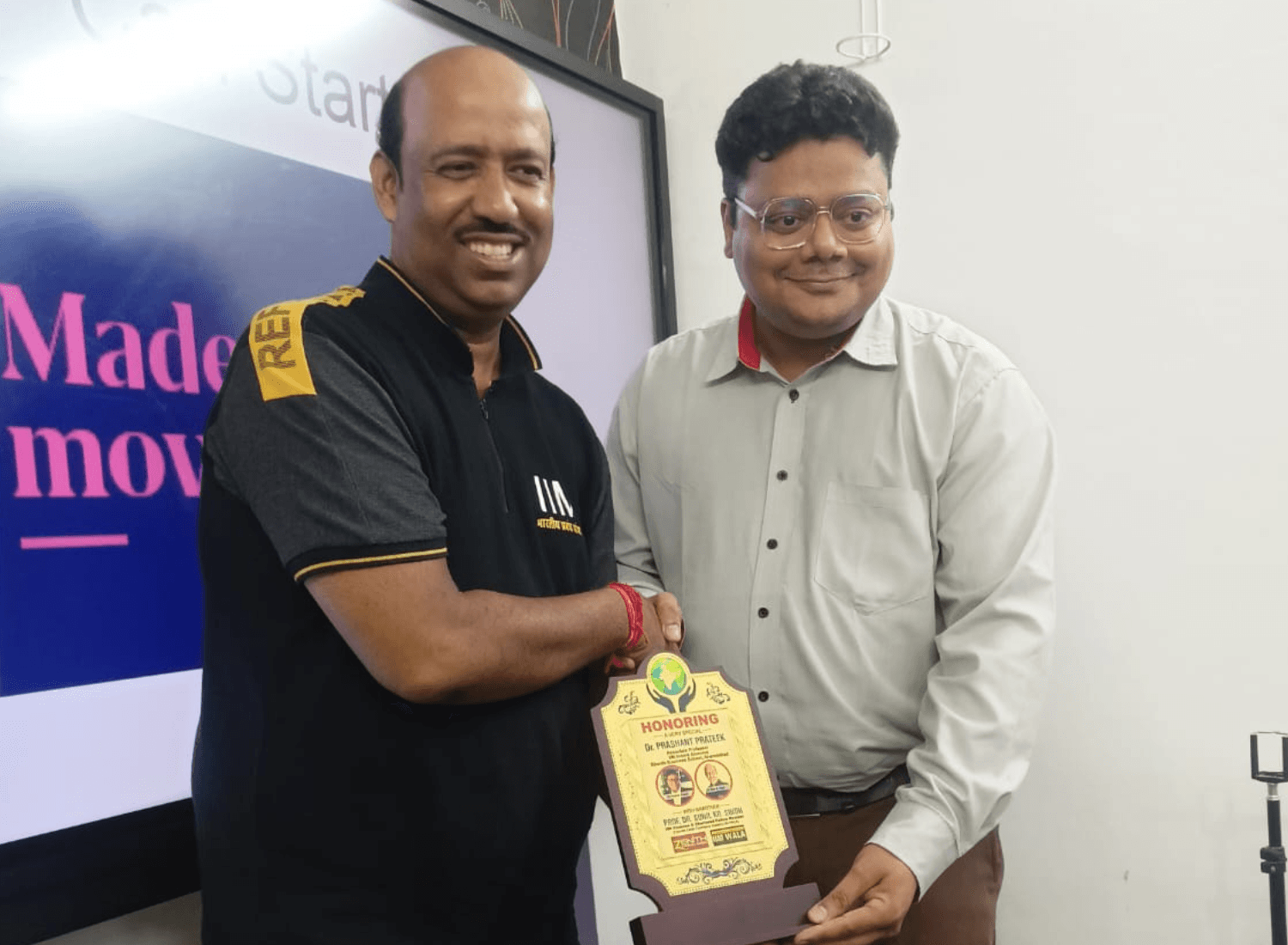
Writing books has dramatically transformed Dr. Pareek's professional landscape. "Now, people call to give talks," he explains. "There are corporates, startups, different institutes, tier 2, tier 3 cities, universities, colleges, and schools that invite me."
The professional opportunities have been substantial. "People invite TEDx speeches," he notes. On average, he receives 35 to 40 speaking engagements annually, representing a significant expansion of his professional reach.
These engagements are not just honorary but have a financial dimension. "If I am invited to 30-35 places in a year to deliver a talk, then I charge around 50% of these," he shares. "The rest 50% I do pro-bono due to old relations."
The impact extends beyond speaking opportunities. "Professionally, as the number of books has increased, people call to give talks," he explains. These invitations come from diverse platforms – corporates, startups, institutes, universities, and schools.
His books have become a gateway to broader professional recognition. "People start considering you an expert in this domain," he notes. This expertise opens doors to various professional opportunities.
The professional growth is not just about quantity but about creating a meaningful brand. "You should use the book to build your personal brand," he advises. Each book is an opportunity to establish credibility and expertise.
These opportunities didn't emerge overnight. "In the beginning, maybe you won't get it in one or the other book," he cautions. "But if there is consistency and you are moving forward in the content, giving rich content, going in-depth, then people will start to take you seriously."
His journey demonstrates that writing can be more than a creative pursuit – it can be a strategic tool for professional development, brand building, and knowledge sharing.
"Professionally, as the number of books has increased, people call to give talks," he explains.
Final Advice for Aspiring Authors
Dr. Pareek's advice for aspiring authors is rooted in his own journey of discovery and passion. "Book writing should be done," he emphasizes. "Not only writing, but use that book to build your personal brand."
His key recommendations include:
Write about your genuine interests
Provide unique content in your chosen domain
Maintain consistency
Focus on quality over quantity
Use writing as a platform for personal branding
"You should take a domain that is your interest area," he advises. "Because you will be able to contribute to that domain." The focus should be on providing unique perspectives rather than repeating existing content.
He encourages authors to think beyond immediate publishing goals. "If you are becoming an author, then become an author with a vision," he says. The vision should be about establishing expertise and making a meaningful contribution to your chosen field.
Time management and consistency are crucial. "If you are publishing one book in a year, you can publish a good book which readers will like," he suggests. The goal is not to rush but to create quality content.
He emphasizes the importance of enjoying the writing process. "Rather than writing a book with a burden, you should enjoy the journey and learn from it," he advises. Each book should be an opportunity for personal and professional growth.
Seeking expert help and being open to feedback is essential. "Even today, when I write a book, I take help from people who can proofread it well," he shares. Overcoming ego and focusing on improvement is key.
For those struggling with topics, his advice is simple: look within. "Collect stories from your experiences, from interactions, from your professional journey," he suggests. Every person has unique stories waiting to be told.
His final message is one of encouragement and possibility. "Start, reach out, and opportunities will open up for you," he says. Writing is not just about publishing a book, but about sharing knowledge and building a personal brand.
Conclusion
Dr. Ramani's journey from finance expert to successful author demonstrates the power of combining expertise with accessibility. His success proves that technical knowledge, when properly presented, can reach and benefit a wide audience.
Key takeaways from his story include:
The importance of practical application
The value of current, relevant examples
The power of integrated marketing
The impact of quality content
The need for continuous updating
Today, he continues to bridge the gap between financial theory and practice, showing that the true value of knowledge lies in its transmission. His experience offers a blueprint for experts looking to transform their knowledge into valuable educational resources.
Looking ahead, Dr. Ramani plans to:
Expand his content offerings
Develop online courses
Create additional resources
Update existing materials
Reach broader audiences
His story serves as inspiration for professionals considering authorship, proving that expertise combined with dedication can create lasting educational impact.

Annual Membership Regular
Price Rs. 9980/-
(One-Time-Offer Only ₹499/-)
Unlock the secrets of Bestselling Authors
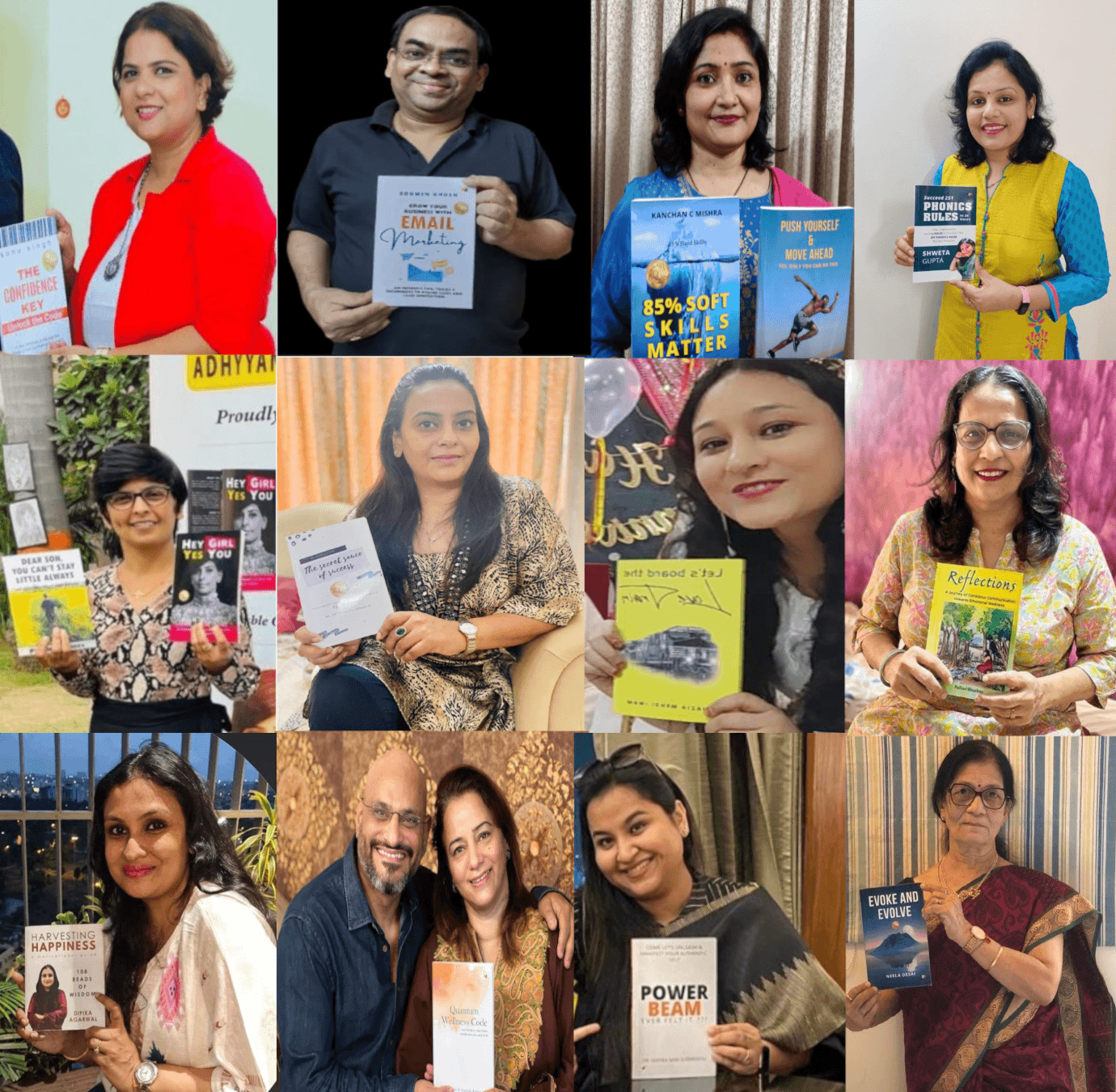
📘 Over 100 more case studies like these...
We Have Been Featured In..
 Unlock all case studies

All Case Studies

Followers
11000+

Followers
8439

Subscribers
11100+

Groups
500+
LAXIMUS BUSINESS VENTURES PRIVATE LIMITED