contact@adhyyanbooks.com | +91-9986728203


All Case Studies

LAXIMUS BUSINESS VENTURES PRIVATE LIMITED
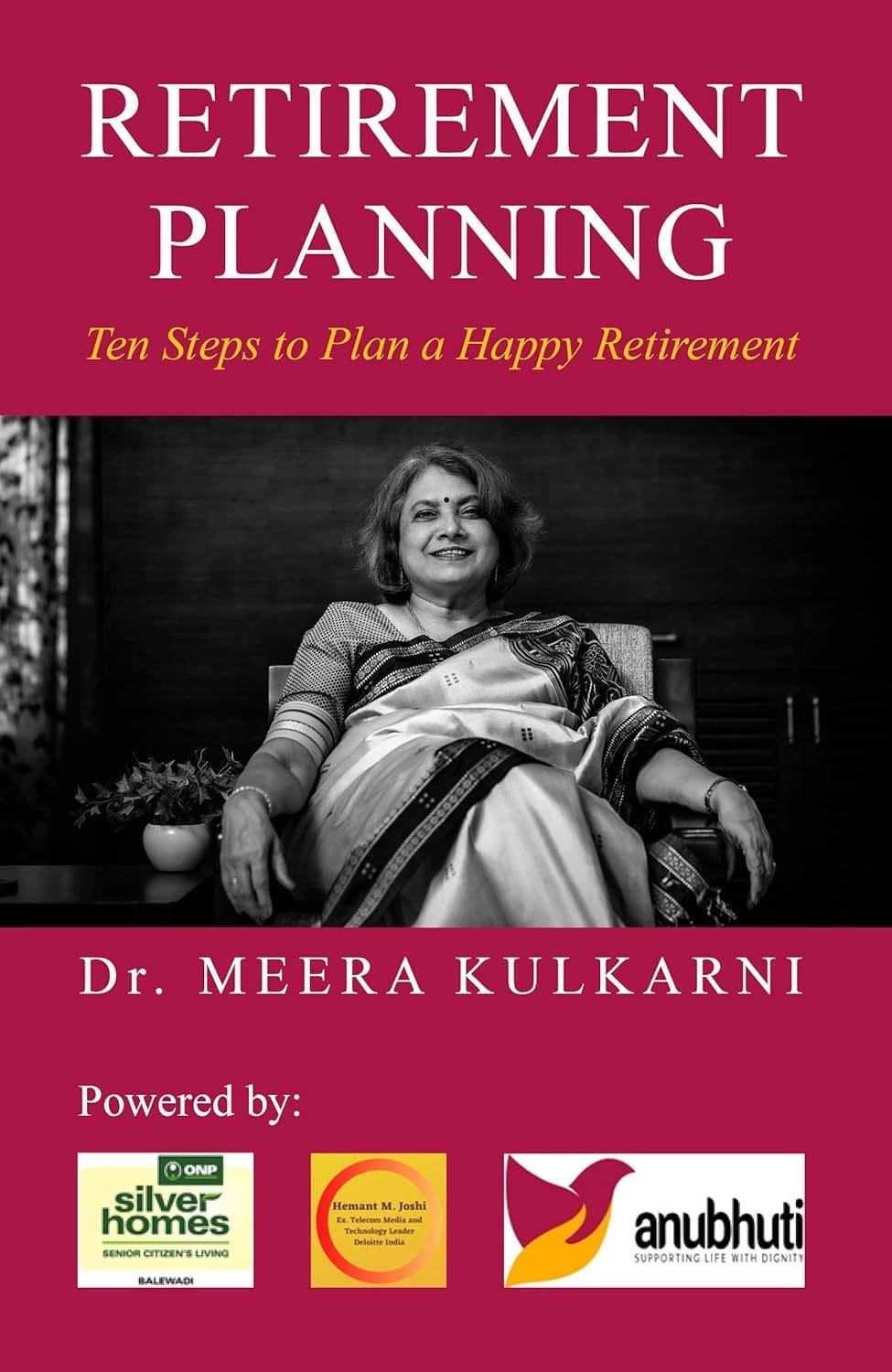
How Dr. Meera Kulkarni's Revolutionary Approach to Retirement Planning Can Transform Your Golden Years
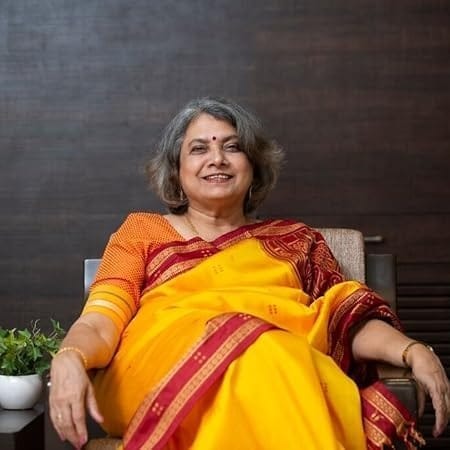
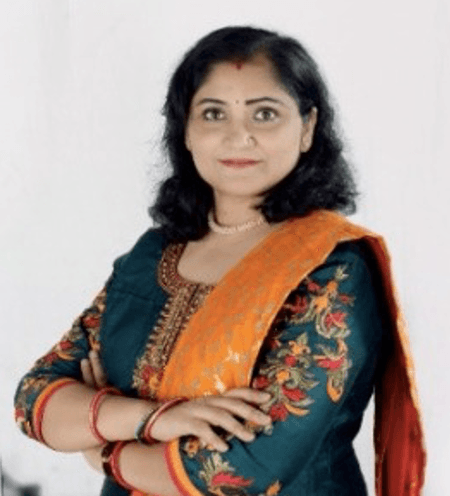
Dr. Meera Kulkarni
NON-FICTION
GENRE
115
NO. OF PAGES
Paperback
BINDING
Introduction: Redefining Life's Third Act
When most people think about retirement planning, their minds immediately jump to financial calculations—pension plans, investment portfolios, and savings accounts. But Dr. Meera Kulkarni saw something that most experts missed: money is just one piece of a much larger puzzle.
Through decades of research and hands-on experience with retirees, Dr. Kulkarni discovered a troubling pattern. People who had meticulously planned their finances often found themselves wealthy but unhappy, financially secure but purposeless, and time-rich but meaning-poor.
"For a holistic harmonious and happy retirement you have to really prepare," Dr. Kulkarni emphasizes. "Corporate India is quite in a neglect. There's just very few organizations that really stretch to look after their retirees post their productive period."
This insight became the foundation of her groundbreaking work—a comprehensive approach to retirement that addresses not just financial security but also purpose, time management, social connections, housing transitions, emotional preparation, and personal development.
Dr. Kulkarni's journey from academic researcher to published author represents more than a career evolution; it embodies a mission to transform how we think about life's third act. Her work challenges us to see retirement not as an ending but as a beginning—perhaps the most fulfilling chapter of our lives, if we prepare for it properly.
ACTION STEP:
Take 15 minutes to write down what "retirement" means to you beyond money. What will fill your days? What will give you purpose? What social connections will you maintain or develop? This simple exercise begins the holistic planning that Dr. Kulkarni advocates and reveals blind spots in your current retirement vision.
The Pre-Author Life: Building a Foundation of Expertise
Dr. Meera Kulkarni's path to becoming an authority on retirement planning was anything but conventional. Her unique perspective was shaped by a life rich in diverse experiences that gave her insight into human adaptation, transition, and fulfillment.
From her earliest years, Kulkarni was no stranger to change and adaptation. As the daughter of an Indian Air Force officer, she had visited 75 cities across India by age 16—experiencing firsthand how humans navigate transitions and establish new patterns in changing environments. This natural laboratory of human adaptation would later inform her understanding of the retirement transition.
Physical discipline and team dynamics became part of her foundation through basketball, where she reached the national level representing Delhi. These experiences taught her about goal-setting, perseverance, and the importance of community support—all crucial elements in successful retirement transitions.
Her academic journey took her through Ferguson College for graduation and then to the prestigious Symbiosis Institute of Business Management, where she was part of just the seventh batch of students. This education provided the analytical frameworks that would later help her organize and communicate complex retirement concepts.
But it was her 27-year tenure at the Institute of Management Studies (affiliated with the University of Pune) that truly shaped her expertise. Here, she didn't just teach management principles—she observed organizational patterns, particularly how companies handled the transition of employees into retirement.
"I'm working with the Institute of Management Studies which is affiliated to the University of Pune and along the way I did my doctoral studies on retirement planning, focusing on corporate India," she explains. This doctoral research became her defining work, uncovering patterns and challenges faced by retirees that weren't being addressed by traditional retirement planning approaches.
As her research deepened, Kulkarni noticed a disturbing gap: while organizations invested heavily in employee development, they often abandoned these same people at retirement. This observation sparked a question that would guide her future work: What happens to human potential after a career ends?
This question led her to develop retirement coaching programs, where she worked directly with individuals preparing for retirement. These personal interactions revealed that the challenges of retirement were remarkably similar across different professional backgrounds, income levels, and personal circumstances.
Through this hands-on work, Dr. Kulkarni developed practical strategies for navigating retirement transitions successfully—strategies that were proven effective but remained unknown to the wider public who needed them most.
ACTION STEP:
Create a "Life Skills Inventory" by listing skills you've developed throughout your career and life that could be valuable in retirement. Include both professional skills (analysis, communication, management) and personal ones (patience, creativity, problem-solving). Beside each skill, note how it might be repurposed in retirement for fulfillment rather than income. This exercise reveals the hidden resources you already possess for a successful retirement.
The Trigger Point: When Knowledge Demands to Be Shared
The COVID-19 lockdown of May 2020 created an unexpected turning point in Dr. Kulkarni's professional journey. As the world paused and reconsidered priorities, she found herself confronting a realization that had been building for years: her valuable research was trapped in academic papers and personal consultations, reaching only a fraction of those who needed it.
"This book I think was inside of me. It was there, but it really took time to come out," she reflects. The enforced stillness of lockdown created space for this long-gestating idea to finally emerge fully formed.
As she observed people around her struggling with unexpected early retirements, health concerns, and profound questions about purpose and meaning, the urgency of her message became clear. The pandemic had inadvertently created a massive, unplanned retirement experiment, with millions suddenly facing the same challenges her research had identified: how to structure time without work, how to maintain purpose, and how to navigate major life transitions.
What crystallized for Dr. Kulkarni during this period was the understanding that academic research, while valuable, often fails to reach or impact those who most need its insights. Complex statistical analyses and theoretical frameworks—the language of academia—created barriers rather than bridges to the very people she hoped to help.
The decision to write a book accessible to general readers wasn't just a publishing choice but a values statement—a declaration that this knowledge belonged to everyone, not just those with access to academic journals or the means to hire personal retirement coaches.
Support arrived in meaningful ways that confirmed she was on the right path. Three sponsors stepped forward: Oyster and Pearl Hospital, NGO Anubhuti, and Mr. Hemant Joshi, an ex-leader from Deloitte India. Their backing provided not just financial support but validation that her message resonated beyond academic circles.
This convergence of personal realization, societal need, and external support created the perfect conditions for transformation—from researcher to author, from academic to guide, from observer to advocate. The book that had been "inside of her" finally had the conditions it needed to emerge.
ACTION STEP:
Identify three wisdom areas where your knowledge could benefit others if made more accessible. For each area, write down: 1) What expertise you possess, 2) Who could benefit from this knowledge, and 3) One way you could make this information more accessible to them (blog post, short video, community talk, etc.). Taking knowledge from "inside you" to those who need it creates value for others while giving you renewed purpose.
Choosing the Topics: Beyond Financial Planning
Determining what to include in her book presented Dr. Kulkarni with a crucial challenge: how to distill decades of research and experience into accessible, practical guidance without oversimplification. Her approach reflected both courage and wisdom—the courage to challenge conventional thinking and the wisdom to focus on what matters most.
Unlike traditional retirement books that emphasize financial calculations and investment strategies, Dr. Kulkarni chose to focus on the aspects of retirement that money can't solve but that ultimately determine quality of life:
Housing transitions became a central topic because where and how you live shapes daily experience. Should retirees stay in their family homes, downsize to smaller accommodations, move to retirement communities, or explore other options? Each choice brings different benefits and challenges that require thoughtful consideration long before retirement begins.
Time management emerged as another critical focus. "We need to plan our 24 hours," she explains, addressing the often-overlooked reality that retirement suddenly presents people with 40-50 additional hours per week that were previously structured by work. Without strategies to fill this time meaningfully, retirees often face boredom, loss of identity, and even depression.
Purpose discovery received particular attention because Dr. Kulkarni's research showed it to be the single greatest predictor of retirement satisfaction. "We need to find a new purpose to live. We need to have some Udtejana, we need to have some Urja, we need to have some kind of excitement in our life," she emphasizes, using expressive terms from her native language to convey the energy and enthusiasm that purpose creates.
Managing life transitions formed another key topic area, recognizing that retirement involves multiple transitions simultaneously—in identity, social connections, daily routine, status, and sometimes location. Dr. Kulkarni included practical strategies for navigating these changes successfully, drawing from both psychology and real-life examples.
Support systems and relationship management completed her holistic approach, acknowledging that retirement affects not just the retiree but spouses, family members, and friends. Preparing these relationships for the changes retirement brings helps prevent common conflicts and disappointments.
Throughout these topics, Dr. Kulkarni maintained a deliberate focus on practical application rather than theory. Each concept is illustrated with real-life examples, reflection questions, and actionable steps that readers can immediately implement in their own retirement planning.
ACTION STEP:
Create a "Retirement Time Map" by drawing a circle divided into segments representing how you would ideally spend your 24 hours in retirement. Include categories like physical activity, creative pursuits, social time, learning, service to others, rest, and practical matters. Compare this ideal map to how you currently spend non-working hours. The gap between these two patterns reveals where you need to develop new interests and habits before retirement.
Publishing Journey: From Research Papers to Reader-Friendly Guidance
The transition from academic researcher to published author demanded from Dr. Kulkarni not just new skills but a fundamentally different mindset about communication. This journey of transformation carried lessons valuable for anyone seeking to share specialized knowledge with a broader audience.
As a researcher, Dr. Kulkarni had mastered the language of academia—precise, data-driven, and often technical. Her publications in scholarly journals had earned respect among peers but remained inaccessible to the general public. "As a researcher, I work with numbers and very stark reporting," she explains. This style, while appropriate for academic audiences, would create barriers for the very people she now hoped to reach.
The challenge became clear: How could she translate complex concepts into engaging, accessible guidance without losing the substance that made her work valuable? This question led her to embrace storytelling as a bridge between expertise and accessibility.
"Here I wanted to engage with stories, real life anecdotes and create people to come and read the book so that they connect with the stories as if they know about it," she recalls. This approach required vulnerability—sharing real examples from her work with retirees and even her own life—that academic writing rarely demands.
Learning to write for engagement rather than just information transmission meant developing new skills. Dr. Kulkarni began studying books that successfully communicated complex topics to general readers, noting their use of anecdotes, metaphors, and conversational language. She practiced writing passages and sharing them with non-academic readers, gathering feedback on clarity and engagement.
Finding the right publisher presented another challenge. Academic presses would reach the wrong audience, while many commercial publishers weren't interested in retirement topics beyond financial planning. The solution came through networking—connecting with publishers who valued practical wisdom and had experience reaching her target audience of pre-retirees and professionals.
Throughout the writing process, Dr. Kulkarni maintained a disciplined focus on her readers' needs rather than her own expertise. When faced with decisions about including technical details or simplifying concepts, she consistently asked, "What will best serve someone preparing for retirement?" This reader-centered approach guided every aspect of the book's development.
The result was a transformation of her research into accessible wisdom—guidance that maintains the substance of her expertise while presenting it in forms readers can easily understand and apply. This achievement represents not just a personal evolution but a model for how specialized knowledge can be democratized for wider benefit.
ACTION STEP:
Practice translating one complex idea from your field of expertise into simple language. Write a one-paragraph explanation using no specialized terminology, then test it with someone outside your field. Ask them to explain the concept back to you in their own words. This exercise develops the crucial skill of making valuable knowledge accessible to those who need it most.

Marketing and Branding: Making Wisdom Accessible
Dr. Kulkarni approached the challenge of marketing her book with the same thoughtfulness she brought to writing it. Rather than seeing promotion as separate from her mission, she recognized that reaching readers was an extension of her purpose—helping people prepare holistically for retirement.
Her strategy began with a crucial insight: different generations approach retirement planning differently and consume information through different channels. To reach both pre-retirees (often in their 40s and 50s) and current retirees seeking to improve their experience, she needed a multi-channel approach.
For younger pre-retirees, digital platforms became essential. Dr. Kulkarni established a YouTube channel where she shared short, focused videos on specific retirement planning topics. These served as both valuable content in themselves and introductions to her more comprehensive book. Social media became another avenue for reaching this audience, with LinkedIn posts targeting professionals who were beginning to think about their retirement horizons.
For those closer to or in retirement, Dr. Kulkarni leveraged more traditional approaches. She connected with retirement communities and organizations to offer workshops and talks, bringing her message directly to those who could immediately apply it. These in-person events created powerful word-of-mouth momentum as attendees shared their experiences with friends facing similar retirement questions.
Corporate networks provided another valuable channel. Having focused her research on corporate India, Dr. Kulkarni had established relationships with HR departments and leadership teams. These connections allowed her to introduce her book to companies as a resource for their pre-retirement programs and exiting executives.
"Always keep your reader in mind and you write in a very simple style,"
she advises, a principle that guided not just her writing but her entire approach to sharing her work. This reader-centered philosophy extended to language choices as well. Recognizing that many in her target audience were more comfortable with their native languages than English, she explored bilingual approaches to make her guidance more accessible.
Particularly effective was her decision to focus marketing on the transformation her book offered rather than just its content. Rather than simply describing topics covered, she highlighted the differences readers could experience in their retirement—moving from uncertainty to confidence, from anxiety to excitement, and from haphazard plans to holistic preparation.
Through these thoughtful approaches, Dr. Kulkarni transformed marketing from a necessary chore into another expression of her mission—ensuring that valuable wisdom reached those who needed it most.
ACTION STEP:
Identify your "value transformation"—the specific change your knowledge helps create in others' lives. Write this as a before-and-after statement: "My expertise helps people move from [current state] to [improved state]." This clarity helps others immediately understand why your knowledge matters to them and motivates them to engage with what you offer.
Business Impact: Creating Meaningful Change
The value of Dr. Kulkarni's work isn't measured merely in book sales or speaking engagements but in transformed lives and shifting paradigms. Her impact extends from individual retirees to organizational practices and societal perceptions about retirement.
At the individual level, readers report significant changes in their retirement preparation. Many have shared how her holistic approach helped them discover blind spots in their planning that would have undermined their retirement satisfaction despite solid financial preparation. One reader, a senior executive, realized through Dr. Kulkarni's guidance that he had planned extensively for financial security but had given no thought to how he would structure his days or maintain a sense of purpose—insights that prompted him to develop new interests and community connections years before retirement.
Organizations have begun shifting their approaches to retirement support based on Dr. Kulkarni's work. Several companies have expanded their pre-retirement programs beyond financial planning to include workshops on purpose discovery, time management, and relationship transitions. These changes represent a meaningful shift toward recognizing companies' broader responsibility toward employees entering retirement.
The ripple effects extend to families as well. Spouses and adult children of readers report better understanding of the retirement transition and how to support their loved ones through it. This family-level impact is particularly significant given how retirement stress often affects relationships negatively when families are unprepared for the changes it brings.
Health professionals have also taken note, with some medical practices and wellness centers incorporating Dr. Kulkarni's holistic retirement preparation concepts into their work with older adults. This medical interest acknowledges the well-documented connection between retirement satisfaction and health outcomes—those who transition successfully to meaningful retirements typically experience better physical and mental health.
Perhaps most significant is the conceptual shift Dr. Kulkarni's work has helped advance: the recognition that retirement represents not an ending but a beginning—a new phase of life with its own opportunities for growth, contribution, and fulfillment. "Retirement is an opportunity in your life when you can really live selfishly for yourself," she notes, reframing retirement as a positive opportunity rather than a loss of identity and purpose.
This reframing transforms retirement planning from a defensive exercise (ensuring you don't run out of money) to a creative one (designing a fulfilling third act of life). This shift in perspective may ultimately be Dr. Kulkarni's most lasting contribution.
ACTION STEP:
Create a "Retirement Vision Board" that represents your ideal retirement visually. Include images representing how you'll spend time, where you'll live, who you'll connect with, and what will give you purpose. This visual representation makes retirement concrete and highlights aspects requiring preparation beyond finances. Review and update this vision quarterly to refine your holistic retirement plan.
Final Advice for Aspiring Authors: From Expertise to Impact
Having successfully navigated the journey from specialized expertise to published author with real-world impact, Dr. Kulkarni offers wisdom that applies not just to writing but to any effort to share valuable knowledge more widely.
"Always keep your reader in mind and you write in a very simple style," she advises. "So, you are not trying to complicate and make the book complex." This fundamental principle—that accessibility matters more than displaying expertise—guided her success. When faced with choices between impressive terminology and understandable language, between comprehensive detail and practical guidance, she consistently chose what would best serve her readers.
The tone of communication proved equally important. Dr. Kulkarni discovered that a suggestive approach works better than prescriptive instructions when guiding adults through life planning. Rather than telling readers exactly what to do, she presents options, shares examples of what has worked for others, and encourages thoughtful consideration of personal circumstances. This respectful approach acknowledges readers' autonomy while still providing clear guidance.
Language accessibility became another crucial consideration. Recognizing that many in her target audience might be more comfortable in languages other than English, she explored bilingual approaches and regional language editions. This attentiveness to language needs reflects a deeper commitment to reaching people rather than just publishing a book.
Perhaps most important was her unwavering focus on purpose rather than profit. When making decisions about content, marketing, or speaking engagements, Dr. Kulkarni consistently returned to her core mission: helping people prepare holistically for fulfilling retirements. This clarity of purpose guided choices that might have been difficult if measured only by commercial metrics.
For experts considering sharing their knowledge through books or other means, Dr. Kulkarni's experience offers a valuable template: start with genuine value, focus relentlessly on accessibility, respect your audience's intelligence while simplifying concepts, and remain connected to the purpose behind your work.
"There is wisdom inside you that others need," she often tells fellow experts. "The question is not whether you should share it, but how to share it in ways others can receive." This perspective transforms knowledge-sharing from self-promotion to service—a framing that often helps reluctant experts overcome hesitation about putting their wisdom into the world.
ACTION STEP:
Select one valuable insight from your experience that could help others. Create three different ways to communicate this insight: 1) A single-sentence summary, 2) A brief paragraph with a real example, and 3) A simple visual representation (diagram, chart, or illustration). This exercise develops flexibility in communicating the same wisdom to different audiences with different learning preferences.
Conclusion: Transforming Knowledge Into Wisdom That Transforms Lives
Dr. Meera Kulkarni's journey from academic researcher to influential author demonstrates how specialized knowledge, when shared thoughtfully, can create ripples of positive change extending far beyond what one person could accomplish directly.
Her work has transformed retirement planning from a narrowly financial exercise to a holistic life preparation process. By addressing the full spectrum of retirement challenges—from housing and time management to purpose discovery and relationship transitions—she has helped countless people avoid the common pitfalls that undermine retirement satisfaction despite financial security.
"Retirement is an opportunity in your life when you can really live selfishly for yourself," she reminds us, highlighting the positive reframing she brings to this life stage. This perspective shifts retirement from something to fear or merely endure to an opportunity for self-actualization and meaningful contribution on one's own terms.
What makes Dr. Kulkarni's story particularly valuable is how it illustrates the journey from expertise to impact. Many professionals accumulate significant knowledge and insight throughout their careers but never share it beyond their immediate circles. Her example shows how this wisdom can be transformed into accessible guidance that benefits many—a model other experts would do well to follow.
The process she followed—recognizing valuable knowledge, adapting communication style for accessibility, focusing on practical application, and maintaining unwavering commitment to serving readers—provides a blueprint for anyone seeking to share specialized expertise more widely.
Perhaps most inspiring is how this knowledge-sharing creates a new kind of legacy. Beyond her direct impact on readers, Dr. Kulkarni has inspired others to share their own wisdom, creating a multiplier effect that extends her influence far beyond what she could achieve alone.
As our global population ages and more people face retirement transitions, the wisdom Dr. Kulkarni has shared becomes increasingly valuable. Her work reminds us that preparing for life's third act requires much more than financial planning—it demands thoughtful consideration of purpose, relationships, time, and meaning.
Through her journey from researcher to author, Dr. Meera Kulkarni has shown us that retirement, when approached holistically, can truly become life's most fulfilling chapter.
ACTION STEP:
Begin a "Wisdom Journal" capturing insights from your professional and personal experiences that might benefit others. Weekly, write down one lesson you've learned that isn't commonly understood in your field. After three months, review these entries and identify patterns that could form the foundation of your own knowledge-sharing through articles, presentations, or even a book. This practice helps you recognize and organize the valuable wisdom you've gained through experience.

Annual Membership Regular
Price Rs. 9980/-
(One-Time-Offer Only ₹499/-)
Unlock the secrets of Bestselling Authors
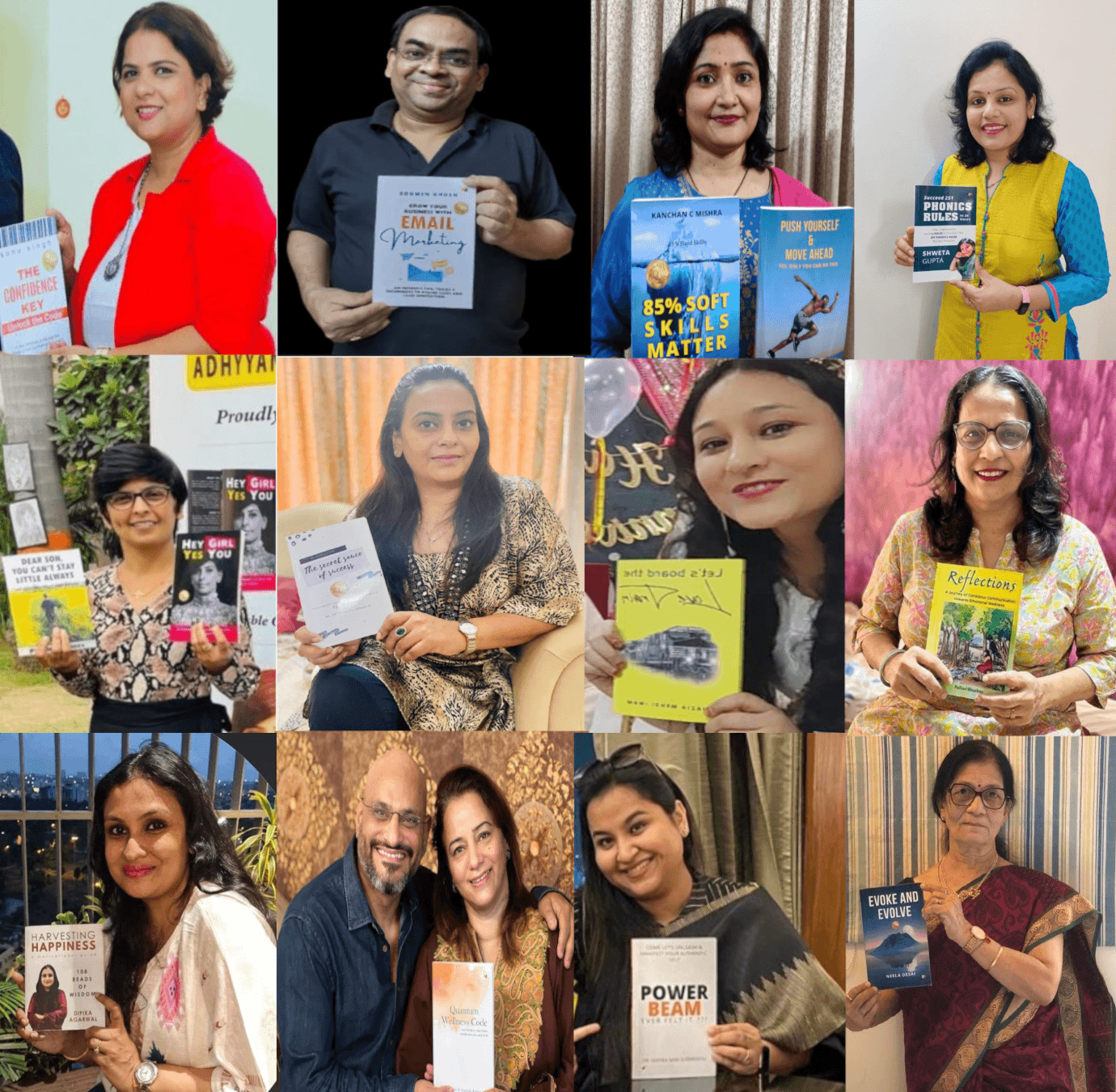
📘 Over 100 more case studies like these...
We Have Been Featured In..
 Unlock all case studies

All Case Studies

Followers
11000+

Followers
8439

Subscribers
11100+

Groups
500+
LAXIMUS BUSINESS VENTURES PRIVATE LIMITED