contact@adhyyanbooks.com | +91-9986728203







All Case Studies

LAXIMUS BUSINESS VENTURES PRIVATE LIMITED
A Multi-Genre Literary Journey Across Four Remarkable Books

Anindita G
Author of 'Saree Facts'
NON-FICTION
GENRE
92
NO. OF PAGES
Paperback
BINDING
From Corporate Burnout to Creative Expression
The fluorescent lights of the banking office felt particularly harsh that Friday afternoon in 2019 as Anindita G submitted her resignation letter. After fifteen years climbing the corporate ladder, she had reached a breaking point.
"I remember my hands trembling as I handed in that letter," Anindita recalls. "Banking had given me stability and respect, but I was working fourteen-hour days and had developed chronic migraines. Something had to change before I completely lost myself."
Her decision wasn't impulsive but the culmination of months of soul-searching. The burnout had become unbearable—waking up with dread, spending weekends recovering rather than living, and feeling increasingly disconnected from her creative self.
"My father was horrified," she admits with a gentle laugh. "He kept saying, 'People fight to get banking jobs, and you're walking away?' But my husband saw how unhappy I was and simply asked what would make me happy instead."
The answer had been germinating for years. During business trips, Anindita had developed a passion for collecting unique sarees from different regions of India, learning the stories behind their weaves and motifs. What began as a personal interest had evolved into deep knowledge.
"I decided to launch a boutique focusing on handloom sarees from artisans whose work wasn't getting the recognition it deserved," she explains. "I had savings, a business plan, and contacts with weavers across three states. Everything was in place for a fresh start."
Then in early 2020, just six months into her new venture, COVID-19 brought the world to a standstill. With retail shut down and artisans unable to work, her fledgling business faced catastrophe.
"I lost nearly 70% of my investment almost overnight," Anindita reveals, the pain still evident in her voice. "There were nights I couldn't sleep, wondering if I'd made the biggest mistake of my life. My father's concerns echoed in my head constantly."
During those long lockdown days, while trying to salvage her business remotely, Anindita began documenting everything she had learned about sarees—their history, craftsmanship, regional variations, and cultural significance. What started as personal notes to preserve her research soon expanded into something more structured.
"Writing became my therapy," she says. "When I couldn't control what was happening to my business, I could at least control this growing document of everything I'd learned. It gave me purpose during those uncertain months."
What Anindita didn't realize then was that these notes would become the foundation for her transformation from struggling entrepreneur to accomplished author.
The Birth of an Author
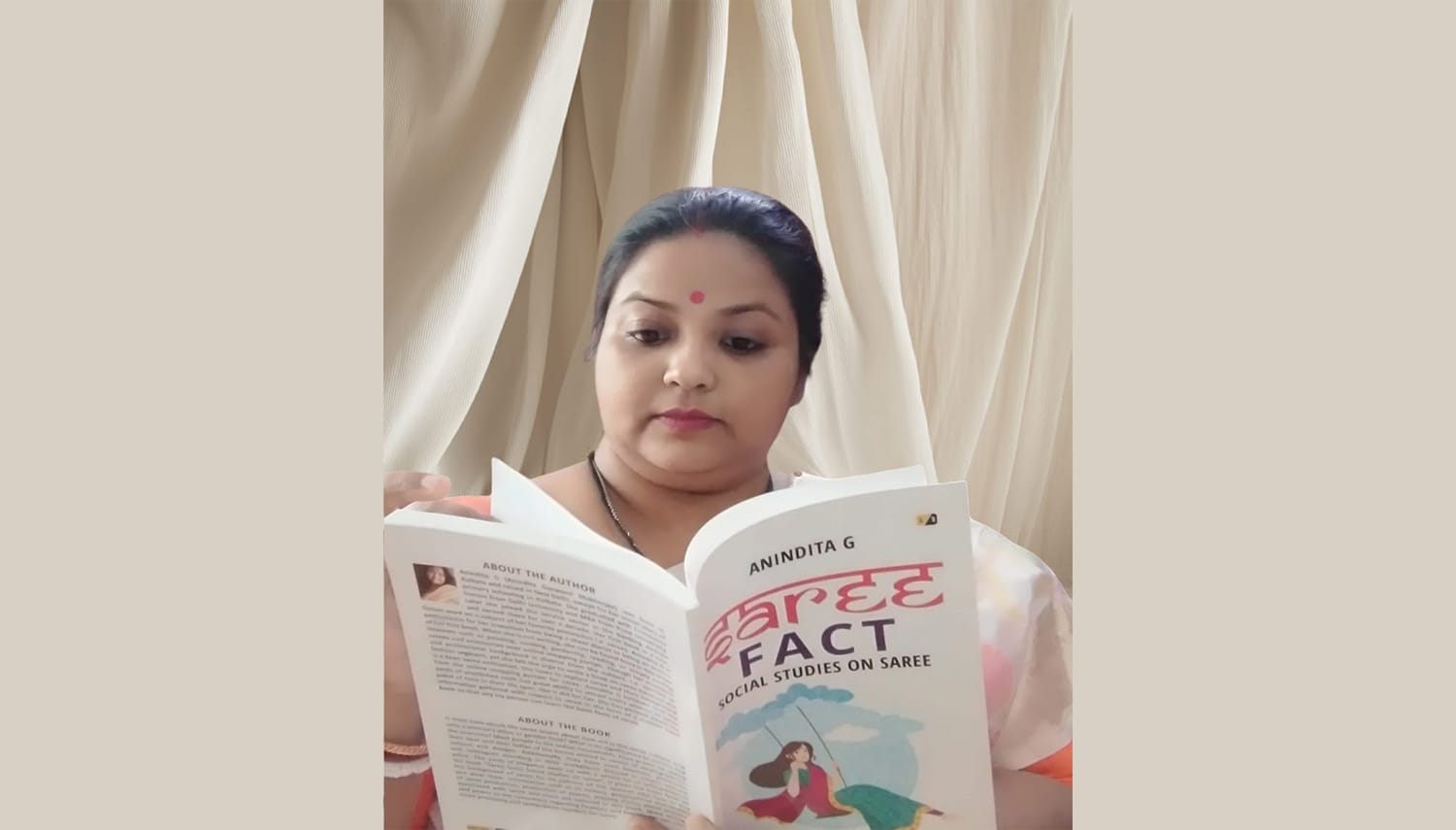
Anindita's journey into authorship began not with literary ambition but with a desire to salvage meaning from failure. As her saree boutique struggled during the pandemic, the document of her research continued to grow.
"One evening, my husband was reading over my shoulder and said something that changed everything: 'This isn't just notes, Ani. This is a book,'" she remembers. "I dismissed the idea immediately. Authors were special people with literary backgrounds—not former bankers with failed businesses."
But the seed had been planted. Anindita began to wonder if her hard-earned knowledge could help others avoid the pitfalls she had encountered.
"I realized I had made every mistake possible when starting my saree business," she admits. "I had romanticized entrepreneurship without understanding the practical challenges of supply chains, inventory management, and market fluctuations. If I could prevent even one person from making those same mistakes, perhaps my failure would have purpose."
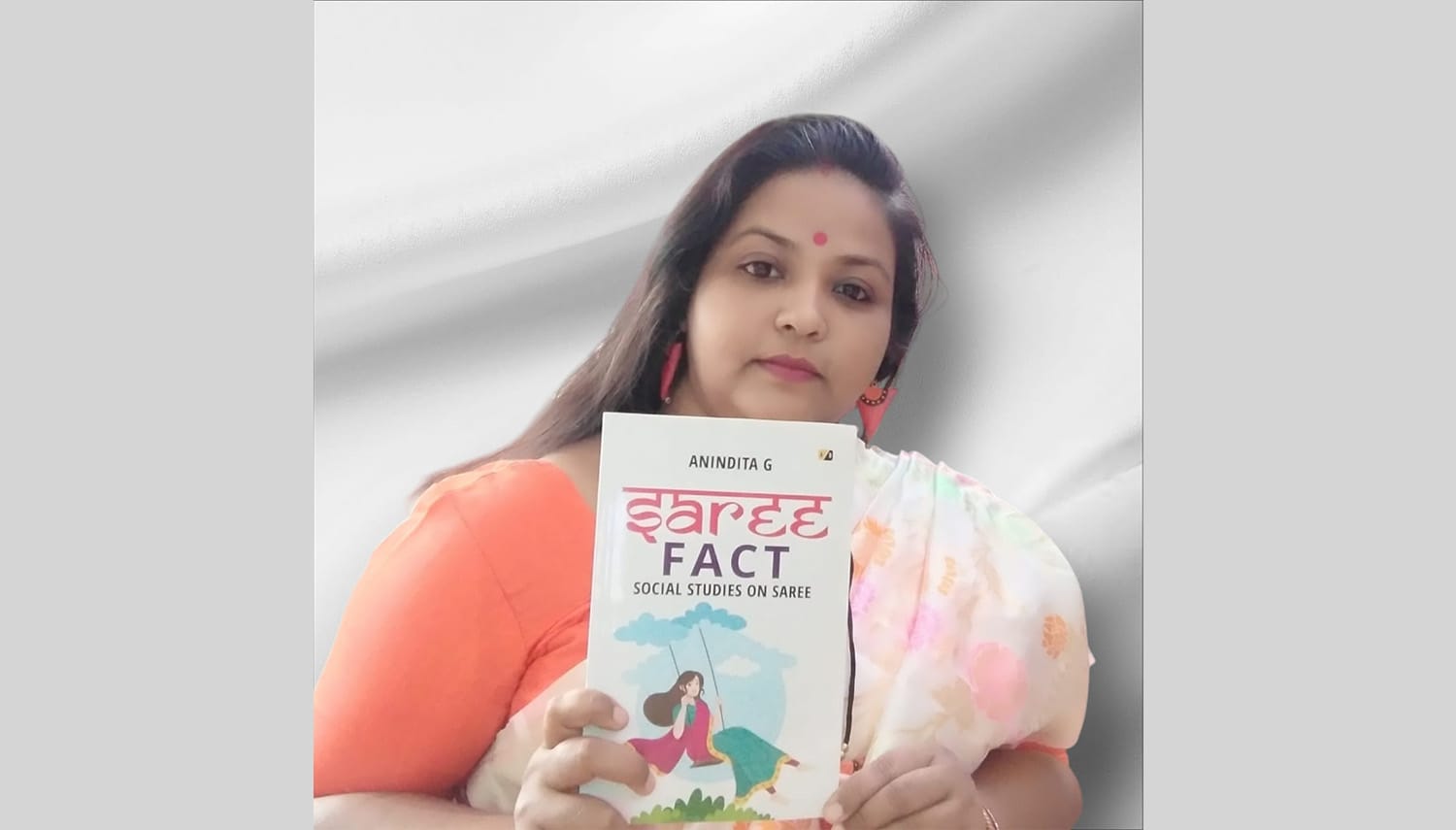
With this new perspective, Anindita transformed her scattered notes into a structured manuscript titled "Saree Facts: A Guide to Understanding, Selecting, and Starting a Business with India's Iconic Garment."
"The first draft was terrible," she laughs. "It read like a banking report—all facts and figures with no soul. I had to learn to write from the heart while still delivering valuable information."
This balance became her greatest challenge. Anindita spent hours rewriting passages, trying to infuse her practical advice with the passion she felt for the subject.
"There was this moment when I was describing a Banarasi silk saree—the way the gold thread catches light like whispers of sun—and suddenly I found my voice," she recalls. "I realized I could be both informative and evocative. That's when I truly became a writer."
While many first-time authors struggle with impostor syndrome, Anindita's doubt ran deeper. Her entrepreneurial failure had shaken her confidence in her judgment.
"I would wake up at 3 a.m. wondering: Who am I to write this book? I couldn't even make my business work," she confesses. "Then I realized—that was exactly why I should write it. Success stories inspire, but failure stories instruct."
This perspective became her driving force. She wasn't writing despite her failure but because of it. Her book would offer both inspiration and practical guidance—the very combination she had needed when starting her own journey.
Crafting Stories and Strategies
Anindita approached writing with the same methodical dedication she had applied in her banking career. Understanding that creativity flourishes within structure, she developed a systematic approach that transformed the overwhelming task of book writing into manageable steps.
"I created what I call a 'narrative blueprint'—essentially a detailed outline that mapped not just chapter topics but the emotional journey I wanted readers to take," Anindita explains. "Each chapter needed to deliver both practical knowledge and emotional resonance."
Her blueprint followed a specific pattern:
Begin with a personal anecdote related to the chapter's topic
Introduce the main educational content with clear subheadings
Provide practical examples or case studies
Include a troubleshooting section addressing common challenges
End with action steps readers could immediately implement
"This structure became my lifeline," she says. "On days when motivation was low, I didn't have to figure out what to write—I just had to fill in the next section of my blueprint."
Despite her structured approach, Anindita still encountered creative blocks. Her strategy for overcoming them was multifaceted:
"When I hit a wall, I had three go-to remedies," she shares. "First, I'd read books in completely unrelated genres—science fiction was particularly helpful for sparking fresh perspectives. Second, I'd visit Quora and search for questions related to my topic, which often revealed angles I hadn't considered. Finally, I'd call one of the artisans I had worked with and simply listen to them talk about their craft. Their passion always reignited mine."
Discipline formed the backbone of Anindita's writing process. She committed to writing two hours daily—from 5:00 to 7:00 each morning before her household awoke.
"Those early morning hours were sacred," she emphasizes. "No phone, no internet, just me and my laptop. I learned that consistency matters more than inspiration. Some mornings I wrote beautiful passages that needed minimal editing; other mornings I produced garbage that I later deleted entirely. But I showed up either way."
This unwavering commitment yielded remarkable results: Anindita completed her first manuscript in just 24 days.
"People are often surprised by how quickly I finished, but they shouldn't be," she notes. "Two hours of focused writing daily equals 48 hours over 24 days—that's effectively a full work week dedicated solely to writing. When you eliminate distractions and follow a clear blueprint, the words accumulate surprisingly fast."
For those struggling with their own writing projects, Anindita offers this practical advice:
"Track your productive hours. I discovered I write best in the early morning, but everyone's different. Experiment until you find your optimal time, then protect it fiercely. And remember—first drafts are meant to be imperfect. My mantra became: 'Write like no one will read it; edit like everyone will.'"
The Role of Research in Writing
Research transformed Anindita's work from a personal memoir into an authoritative resource. Her approach combined traditional methods with innovative digital strategies, creating a research process that was both thorough and efficient.
"Many first-time authors make the mistake of either doing too little research or getting so lost in research they never actually write," Anindita observes. "I created a system I call '60-30-10': spend 60% of your research time drawing from your own experience and expertise, 30% verifying and expanding that knowledge through external sources, and 10% exploring contrary perspectives that challenge your thinking."
This balanced approach ensured her books were both authentic to her voice and factually sound. For her saree book specifically, Anindita's research involved:
"I interviewed twenty-seven weavers and artisans, documenting not just their techniques but their stories and challenges," she explains. "I studied textile conservation methods at a local museum. I analyzed pricing structures across different markets. And I systematically collected customer questions from my time as a boutique owner, ensuring my book addressed real concerns, not just my assumptions about what readers wanted to know."
Digital platforms became invaluable research tools. Anindita discovered that Quora, in particular, offered unique insights into consumer perspectives.
"On Quora, I found questions about sarees that never would have occurred to me," she reveals. "Someone asked why Kanjeevaram silk sarees are heavier than others, which led me to research the specific weaving techniques that create that weight. Another person asked about caring for vintage sarees, which prompted an entire chapter on preservation methods."
While embracing technology, Anindita maintained a critical approach to AI tools.
"I used AI-powered paraphrasing tools, but very selectively," she cautions. "They're excellent for suggesting alternative sentence structures when your writing becomes repetitive, but they can strip away your unique voice if overused. I established a rule: AI could suggest, but I would always rewrite in my own words, maintaining my authentic expression."
Her research extended to competitive analysis of existing books on her topic:
"I purchased every book about sarees I could find—seventeen in total—and created a spreadsheet identifying their strengths, weaknesses, and knowledge gaps," she says. "This revealed an opportunity: while many books covered the artistic and cultural aspects of sarees, none adequately addressed the business perspective. That became my niche."
For aspiring non-fiction authors, Anindita offers this concrete advice:
"Create a 'knowledge inventory' before you begin. List everything you already know about your topic, everything you think you know but need to verify, and everything you need to learn. This prevents research overwhelm and helps you progress systematically. And always test your key points with potential readers—I shared early drafts of specific chapters with former customers to ensure my advice truly addressed their needs."
Publishing: The Leap of Faith
The transition from completed manuscript to published book presented Anindita with entirely new challenges. Having mastered the writing process, she now faced the complex landscape of publishing options.
"I approached publishing like any other business decision," Anindita explains. "I created a decision matrix with three options: traditional publishing, hybrid publishing, and self-publishing. For each, I evaluated factors like creative control, time to market, revenue potential, and required investment."
Her research revealed surprising realities about the publishing industry:
"I discovered that for a first-time author with a niche non-fiction topic, traditional publishing presented significant barriers," she notes.
"Acquisition editors explained that without an established platform or media presence, my book would be considered high-risk despite its quality. One editor candidly told me that if I pursued traditional publishing, my book might not reach readers for 18-24 months—if it was accepted at all."
This timeline felt unacceptable to Anindita, who believed her information could help entrepreneurs struggling during the pandemic.
"Self-publishing emerged as the clear choice for my specific goals," she says. "I wanted complete creative control, faster time to market, and the ability to update content as the industry evolved. But I was determined to produce a book indistinguishable in quality from traditionally published works."
To achieve this, Anindita invested in professional services:
"I hired a developmental editor who specialized in business books (₹45,000), a copy editor with experience in textile publications (₹30,000), and a cover designer who had worked with major publishing houses (₹25,000)," she details. "These were significant investments given my financial situation after my business challenges, but I viewed them as essential to creating a professional product."
The technical aspects of self-publishing presented a steep learning curve:
"Amazon's Kindle Direct Publishing platform seemed straightforward until I encountered formatting issues with my image-heavy manuscript," Anindita recalls. "I spent three frustrating days learning about bleed settings, embedded fonts, and color profiles. Eventually, I connected with another self-published author through a Facebook group who guided me through the process."
For print distribution, Anindita made strategic choices:
"I used Amazon for global reach but also partnered with a local print-on-demand service that could distribute to independent bookstores in major Indian cities," she explains. "This dual approach ensured my book was available wherever potential readers might look for it."
The financial reality of self-publishing required careful planning:
"I set my retail price at ₹499, calculating that after production costs and platform fees, I would need to sell approximately 400 copies to break even on my investment," she shares. "I reached that milestone within the first six weeks, validating my decision to self-publish."
For authors considering their publishing options, Anindita offers this practical advice:
"Don't make assumptions about publishing paths based on prestige alone. Create a business plan for your book with clear goals, timeline, and budget. Then choose the publishing route that best serves those specific goals. And whatever path you choose, invest in professional editing—it's the one expense that delivers returns in both credibility and reader satisfaction."
A Writer’s Evolution
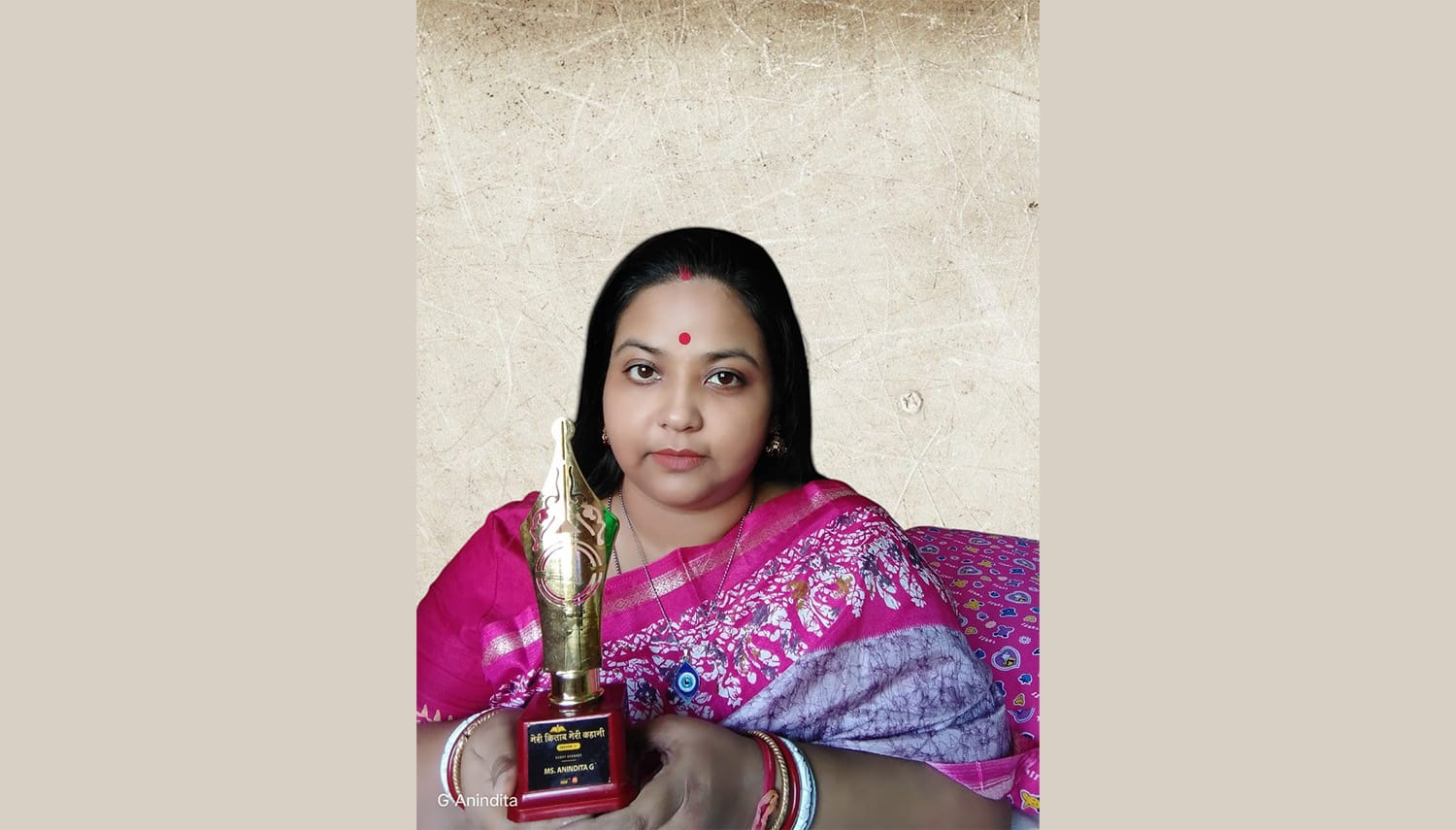
What began as a single book born from adversity evolved into a multi-genre writing career that has surprised even Anindita herself. Her journey across different literary forms reveals how versatility can become a writer's greatest strength.
"After publishing 'Saree Facts,' I assumed I had said everything I needed to say as an author," Anindita admits. "The book was performing well beyond my expectations, and I was content with having created this single work. Then the emails started arriving."
Readers of her first book began sharing their own stories—about businesses started, family traditions preserved, and connections to cultural heritage strengthened. But they also shared personal challenges that went beyond the scope of her saree guide.
"One woman wrote about how starting her saree business helped her reclaim her identity after an arranged marriage that had left her feeling invisible," Anindita recalls. "Her story haunted me for weeks until I realized there was another book demanding to be written."
This became the genesis of her second book, a fiction novel titled "The Arranged Marriage Business," which explored the complexities of tradition, personal agency, and entrepreneurship through the story of a young woman navigating both a new marriage and a new business venture.
"Fiction terrified me," she confesses. "In non-fiction, my banking background gave me confidence in presenting facts and analysis. But fiction required a vulnerability I wasn't sure I possessed. I had to create characters with authentic emotional lives and put them through difficulties I sometimes knew too well."
Anindita approached this new challenge methodically, enrolling in a six-week online fiction writing course and studying the structure of novels she admired.
"I discovered that my strength in non-fiction—creating clear, logical progressions of ideas—became my weakness in fiction," she explains. "My early drafts read like case studies with dialogue. My writing instructor pushed me to 'stay in the mess' of emotions rather than tidying them into neat conclusions."
This willingness to embrace discomfort fueled Anindita's growth. Her third book combined elements of both genres, creating a hybrid "business fable" that taught entrepreneurial principles through an engaging narrative.
"With each book, I've learned that genre constraints are often self-imposed," she reflects. "My fourth book, 'Banking on Yourself: Financial Wisdom for Creative Entrepreneurs,' brought my journey full circle, allowing me to reclaim and repurpose my banking expertise in service of the creative community I'd joined."
This evolution across genres has taught Anindita valuable lessons about building a cohesive author brand:
"I worried that writing across genres would confuse readers, but I've found the opposite to be true," she notes. "What connects my work isn't genre but perspective—I consistently write about empowerment, agency, and transformation. Readers who resonate with those themes follow me regardless of whether I'm writing fiction or non-fiction."
For writers hesitant to explore multiple genres, Anindita offers this encouragement:
"Start by identifying the core themes that matter deeply to you. Those themes can find expression in many forms. My finance background, entrepreneurial experience, and interest in women's empowerment create a unique perspective that distinguishes my work, regardless of genre. Don't let arbitrary boundaries limit your creative exploration."
The Impact of Authorship
Becoming an author transformed Anindita's life in ways both expected and surprising, creating ripple effects that extended far beyond book sales and reviews.
"The most immediate change was in how I viewed myself," Anindita reflects. "Before publishing, I introduced myself as 'a former banker who tried to start a business.' After my book launched, I became 'an author and entrepreneur.' The shift wasn't just semantic—it fundamentally altered my sense of identity and purpose."
This newfound identity opened unexpected professional doors:
"Six months after publishing 'Saree Facts,' I was invited to consult with a textile cooperative that was struggling to modernize their business model," she shares. "They had read my book and valued both my business background and my deep respect for artisanal traditions. This consulting work now provides steady income that supports my writing career."
Social media, once a source of anxiety for the naturally private Anindita, became a powerful platform for connection:
"I was reluctant to create an author Instagram account—I'm not photogenic and dislike being photographed," she admits with a laugh. "But I discovered that readers weren't looking for glossy perfection. They connected with my behind-the-scenes posts about research challenges, my collection of sarees, and the honest reflections on my writing journey."
Her approach to social media focuses on value rather than self-promotion:
"Every Monday, I share practical tips related to either writing or entrepreneurship. Wednesdays, I post mini-profiles of artisans whose work I admire. Fridays, I answer reader questions," Anindita explains. "This consistent schedule built an engaged community of over 27,000 followers across platforms, without me ever having to post a single selfie."
This online presence amplified her impact in tangible ways:
"A textile professor from NIFT [National Institute of Fashion Technology] discovered my Instagram page and invited me to develop a guest lecture series on the business aspects of traditional crafts," she notes. "That lecture series has now been incorporated into their curriculum, influencing future generations of designers and entrepreneurs."
Perhaps most meaningfully, Anindita's books have inspired concrete action:
"Twenty-three readers have written to tell me they've started businesses after reading my work," she says, her voice filled with quiet pride. "One woman in her sixties had collected Banarasi sarees for decades. After reading my chapter on curating vintage collections, she launched an exhibition that has now toured three cities."
For those considering authorship, Anindita emphasizes its transformative potential:
"A book isn't just a product—it's a platform that establishes you as a thought leader in your field," she advises. "But that platform carries responsibility. I receive emails daily from readers seeking advice, which I now carefully answer every Sunday afternoon. These connections are not just the reward for writing; they're the purpose."
She offers this practical guidance for maximizing a book's impact:
"Create a simple landing page for your book where you offer something of additional value—I provide downloadable guides for evaluating saree quality and creating business plans. This builds your email list while serving your readers. And always include a note in your book inviting readers to share their stories with you. Those stories will fuel your next creative project and remind you why your work matters."
Looking Ahead
With four books published in just eighteen months, Anindita has established herself as a prolific and versatile author. Her journey from corporate burnout to creative fulfillment continues to evolve, shaped by both careful planning and openness to unexpected opportunities.
"I never intended to build a career as an author," Anindita reflects, "but writing has become the thread that weaves together all my previous experiences and future aspirations. Each book has led me toward greater clarity about my purpose."
That purpose has crystallized into a mission that extends beyond her own writing:
"I'm currently developing a six-week online course called 'From Expertise to Authorship,' designed specifically for mid-career professionals who want to translate their specialized knowledge into books," she reveals. "So many brilliant people retire with decades of wisdom that is never shared. I want to change that."
The course represents a new direction that combines Anindita's backgrounds in finance, entrepreneurship, and writing:
"The course addresses both the creative and business aspects of authorship," she explains. "We cover everything from organizing complex information into accessible narratives to creating sustainable revenue streams from a single book through speaking engagements, consulting opportunities, and derivative products."
Alongside this educational venture, Anindita continues to expand her own literary portfolio:
"I'm currently researching my most ambitious project yet—a historical fiction novel set in the textile markets of 1940s Kolkata," she shares. "It requires extensive historical research and interviews with elderly artisans to accurately capture both the technical details of the craft and the social dynamics of that era."
This project reflects her growth as a writer willing to embrace increasingly complex challenges:
"Each book should stretch you in some way," she advises. "My first book leveraged knowledge I already possessed. My second required me to develop new fiction skills. My third and fourth combined different aspects of my expertise. This fifth book demands historical research methods I'm still learning. That progression keeps the work engaging and prevents stagnation."
Despite her success, Anindita maintains perspective about the realities of life as an author:
"Writing has not made me wealthy in financial terms," she acknowledges candidly. "My consulting work still provides the majority of my income. But authorship has enriched my life immeasurably through the connections, opportunities, and sense of purpose it has created."
For those considering their own creative reinvention, regardless of age or background, Anindita offers this encouragement:
"Your previous career isn't a detour from your creative path—it's preparation. My banking experience taught me analytical thinking, my entrepreneurial venture taught me resilience, and both inform my writing in countless ways. Nothing is wasted if you learn to reframe it as an asset rather than a limitation."
She concludes with the simple philosophy that has guided her remarkable journey:
"Begin before you feel ready, because you'll never feel fully ready. Structure creates freedom, so embrace systems that support your creativity rather than relying solely on inspiration. And remember that books aren't written—they're rewritten. The magic happens in revision, so don't fear imperfect first drafts. Just start, and trust that your voice will clarify with each word you write."
Anindita's story continues to unfold, page by page, book by book—a testament to the transformative power of creative reinvention at any stage of life.

Annual Membership Regular
Price Rs. 9980/-
(One-Time-Offer Only ₹499/-)
Unlock the secrets of Bestselling Authors
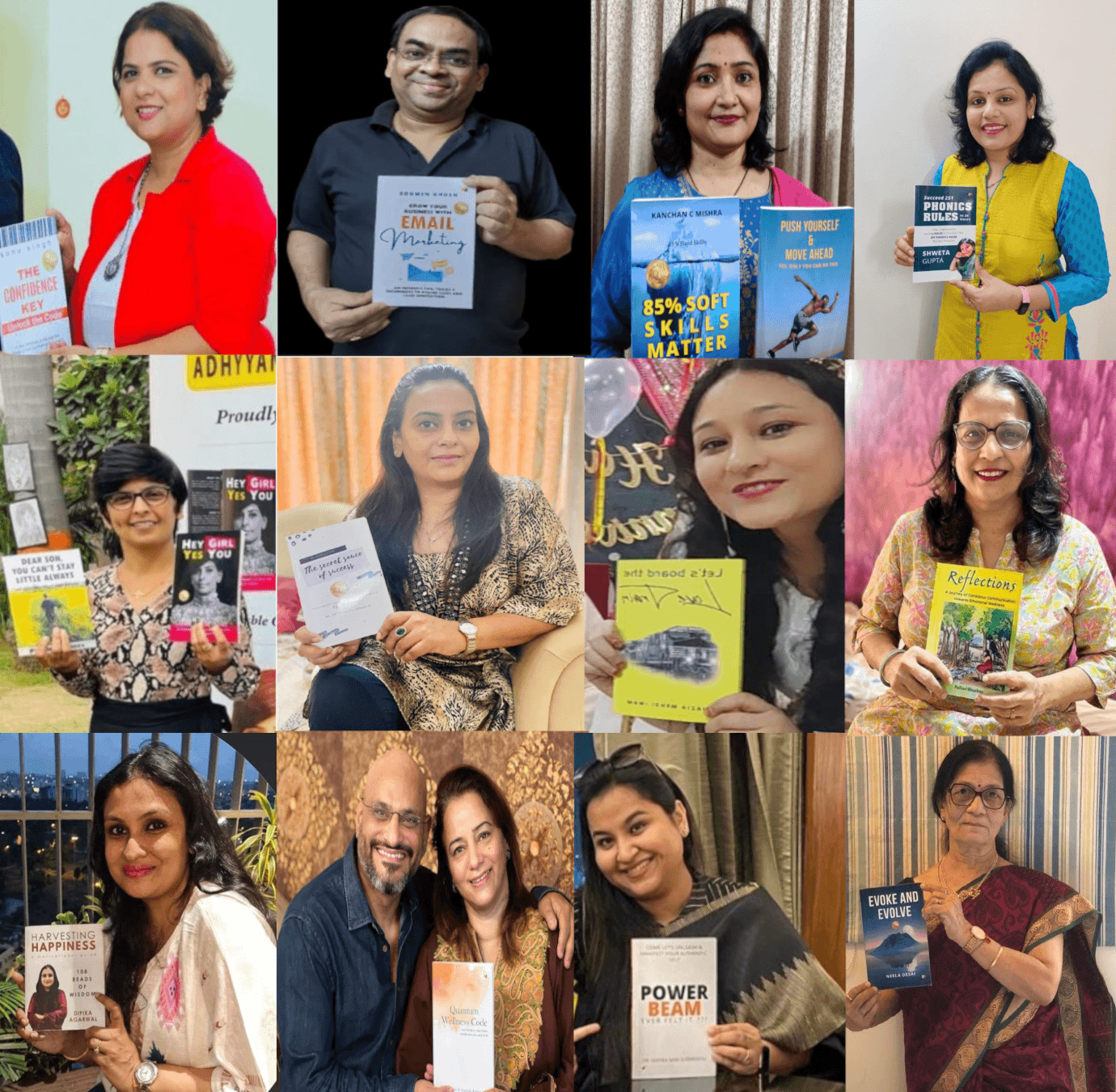
📘 Over 100 more case studies like these...
We Have Been Featured In..
 Unlock all case studies

All Case Studies

Followers
11000+

Followers
8439

Subscribers
11100+

Groups
500+
LAXIMUS BUSINESS VENTURES PRIVATE LIMITED