contact@adhyyanbooks.com | +91-9986728203








All Case Studies

LAXIMUS BUSINESS VENTURES PRIVATE LIMITED
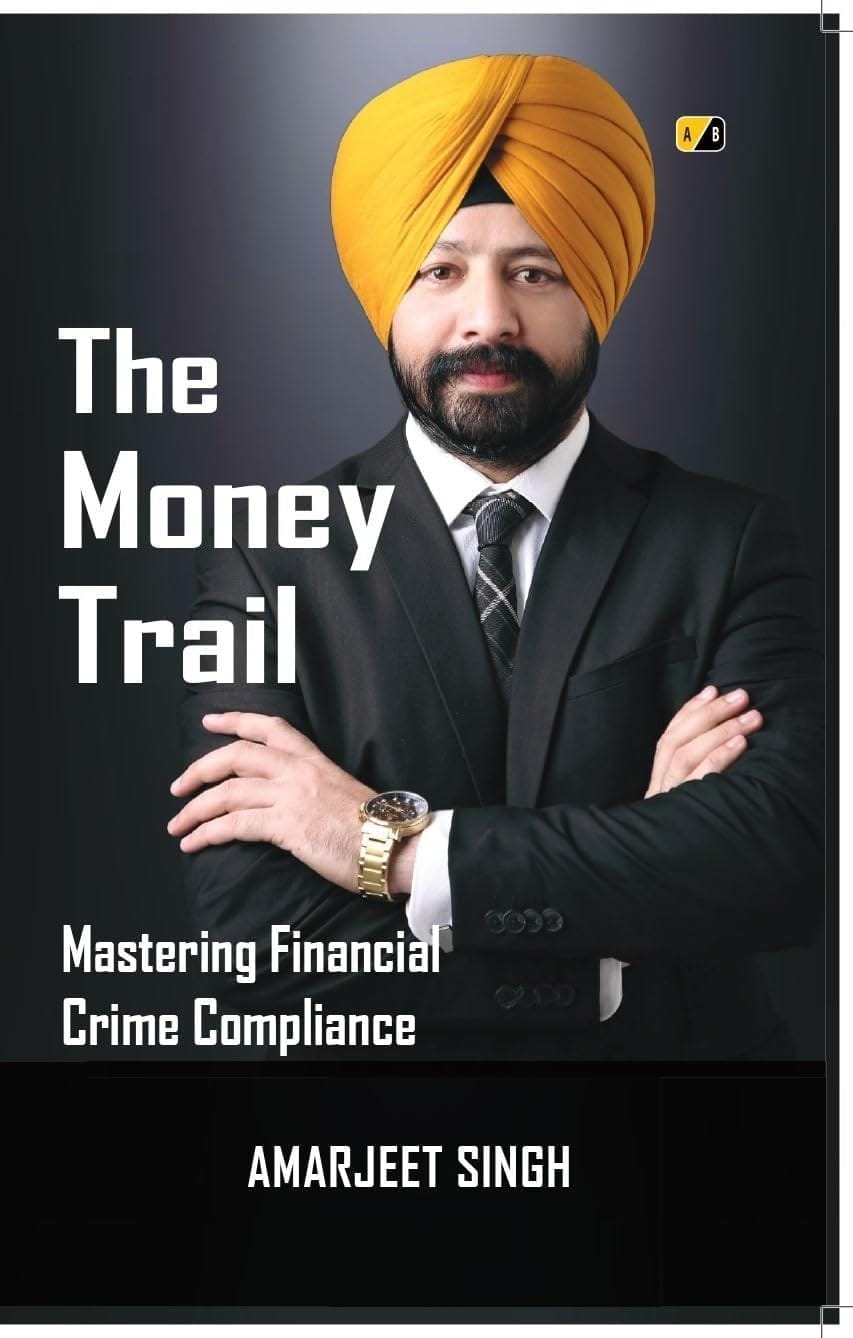
How Amarjeet Singh's Journey from Compliance Expert to Author Is Changing the World of Finance

Amarjeet Singh
NON-FICTION
GENRE
138
NO. OF PAGES
Paperback
BINDING
Introduction: The Invisible Protector
In a world where financial crimes threaten global economies, there are silent guardians working behind the scenes to protect the integrity of our financial systems. Amarjeet Singh is one such guardian who decided to share his battle strategies with the world through his groundbreaking book, "The Money Trail: Mastering Financial Crime Compliance."
Unlike most authors who write to entertain, Amarjeet wrote to fortify. His mission wasn't simply to publish a book but to create a shield against financial crimes that impact everyone—from major institutions to everyday citizens whose savings and security depend on financial stability.
With extensive experience in leading financial institutions across the globe, Amarjeet has witnessed firsthand how sophisticated criminals exploit weaknesses in financial systems. What makes his story remarkable isn't just his expertise but his decision to transform that knowledge into accessible wisdom for others fighting the same battle.
"Financial crime is not just an institutional concern; it affects entire economies. A strong compliance framework is essential to safeguard financial integrity," explains Amarjeet. This belief became the foundation of both his career and his authorship journey—a journey that would ultimately touch thousands of professionals and strengthen countless financial institutions.
ACTION STEP:
Identify an area where your specialized knowledge could benefit others if shared more widely. Create a simple one-page outline of the three most valuable insights you could teach someone new to your field. This exercise helps clarify whether you might have a book worth writing or a valuable course to teach.

The Pre-Author Life: Building Expertise Through Global Experience
Long before Amarjeet Singh became an author, he was building the foundation of knowledge that would make his book invaluable. His path was one of constant growth and deliberate skill development across cultures and institutions.
Born in the picturesque region of Jammu and Kashmir, Amarjeet's early life instilled in him values of integrity and diligence. His educational journey began with graduation from Islamic College, but it was his decision to pursue an MBA at IEM Bangalore in 2010 that set him on the path toward financial compliance excellence.
His professional journey reads like a masterclass in career progression. After completing his MBA, Amarjeet joined Deutsche Bank, where he spent two formative years honing his understanding of financial systems. This experience became the springboard to Societe Generale, where he worked in both Indian and Parisian offices, gaining invaluable cross-cultural insights into how different regions approach financial security.
The true turning point came in 2015 when HSBC Bank in Dubai recognized his talent and brought him on board to tackle the critical challenges of anti-money laundering and counter-terrorist financing. Here, Amarjeet wasn't just applying regulations—he was helping shape how institutions respond to evolving threats.
Today, as Head of Compliance at Sharaf Group, one of Dubai's largest financial institutions, Amarjeet leads a team of 35 professionals dedicated to protecting financial integrity. This position represents the culmination of a career built on expertise, integrity, and a deep commitment to financial security.
Throughout these professional experiences, a philosophy emerged that would later define his book: "Compliance is not just about following rules; it's about building trust in the financial system." This perspective transformed compliance from a box-checking exercise into a mission of protection and trust-building.
ACTION STEP:
Create a "career wisdom journal" documenting the three most significant challenges you've overcome in your professional life and the specific strategies that worked. Update it monthly with new insights. This practice not only preserves your knowledge but begins organizing it in a way that could benefit others through articles, presentations, or even a book.
The Trigger Point: When Knowledge Becomes Responsibility
Every author has a moment when writing becomes not just an option but a necessity. For Amarjeet Singh, this moment came through a growing recognition of a dangerous gap in the financial world.
Year after year, Amarjeet witnessed financial crimes growing more sophisticated while the resources to combat them remained scattered and incomplete. Money launderers, fraudsters, and terrorism financiers were constantly evolving their tactics, while compliance professionals often worked with outdated playbooks or had to learn through costly trial and error.
What troubled him most wasn't just the increasing complexity of these crimes but the real-world impacts they had. Behind every successful money laundering scheme were potential links to human trafficking, drug trade, or terrorist activities. Behind every fraud were real people losing their savings, businesses closing, and trust in financial systems eroding.
The breaking point came when Amarjeet realized that the knowledge he and other senior compliance professionals had gained through years of experience wasn't being effectively passed down to the next generation of financial guardians. There was no comprehensive resource that bridged theory and practice—nothing that translated complex regulations into actionable protection strategies.
"Criminals are always a step ahead; compliance professionals must stay vigilant and adaptable to evolving threats," Amarjeet observed. This reality created both urgency and purpose. If financial crimes were constantly evolving, then the knowledge to combat them needed to evolve and spread just as quickly.
The decision to write "The Money Trail" wasn't made lightly. It meant countless hours beyond his already demanding role at Sharaf Group. But Amarjeet recognized that his position gave him not just knowledge but responsibility—to share what he had learned for the greater protection of financial systems worldwide.
ACTION STEP:
Identify a persistent problem in your field that your experience has taught you to solve efficiently. Create a simple one-page "solution framework" that outlines your approach. Share this with three colleagues for feedback. This exercise clarifies whether your knowledge has unique value that deserves wider sharing.
Choosing the Topics: Creating a Financial Crime Defense Blueprint
Crafting "The Money Trail" wasn't simply about dumping years of experience onto paper—it required careful selection of topics that would provide maximum value to readers. Amarjeet approached this challenge with the same strategic thinking he applied to compliance systems.
The book's structure emerged from Amarjeet's recognition of what financial professionals most urgently needed to know. Rather than organizing around regulations (which constantly change), he built the content around enduring principles and adaptable frameworks that would remain relevant despite regulatory evolution.
At its foundation, the book explains key financial compliance concepts like anti-money laundering (AML) and counter-terrorist financing not as abstract regulations but as practical protection mechanisms. Amarjeet stripped away jargon to reveal the core purpose behind compliance measures: stopping criminals from using financial systems for harmful purposes.
Recognizing that theory without application has limited value, Amarjeet incorporated real-world case studies throughout the book. These anonymized examples demonstrated both the ingenious methods criminals use and the effective countermeasures that stopped them. By showing compliance in action, readers could see beyond rules to understand patterns and principles.
Particularly valuable was his analysis of regulatory bodies like the Financial Action Task Force (FATF) and their role in setting global standards. Rather than presenting these organizations as distant authorities, Amarjeet explained how their guidelines could be translated into effective institutional practices.
Perhaps most importantly, the book serves as a blueprint for establishing compliance programs that work in real-world conditions. Instead of presenting an idealized system that would collapse under real pressures, Amarjeet offered practical guidance for building programs that could detect suspicious activity while maintaining operational efficiency.
"A strong compliance framework is the foundation of a resilient financial system," Amarjeet emphasizes. This belief guided his topic selection, ensuring the book would not just inform readers but empower them to build better protective systems.
ACTION STEP:
For any complex subject you want to teach others, create a "knowledge pyramid" diagram. At the bottom, list fundamental concepts everyone must understand. In the middle, place practical applications. At the top, include advanced strategies. This visual organization helps ensure you cover essential foundations before moving to sophisticated techniques.
Publishing Journey: From Financial Expert to Author
The transition from financial compliance expert to published author presented Amarjeet with an entirely new set of challenges—ones that tested his determination in unexpected ways.
Writing "The Money Trail" while maintaining his leadership role at Sharaf Group required a level of time management that pushed even Amarjeet's disciplined nature. Early mornings before work, weekends, and even vacation days became precious writing time. What sustained him through these sacrifices was the conviction that his book could strengthen financial security worldwide.
The technical nature of the content presented unique challenges. How could complex compliance concepts be made accessible without oversimplification? How could real case studies be included while maintaining necessary confidentiality? Amarjeet tackled these questions by constantly asking himself, "Would this explanation help a new compliance officer understand not just what to do, but why it matters?"
His partnership with Adhyyan Books proved crucial to the process. Their editorial team helped translate Amarjeet's technical expertise into content that remained accurate while becoming more accessible to readers with varying levels of financial background. This collaboration transformed a manuscript into a true teaching tool.
The book launch exceeded expectations, with financial professionals quickly recognizing its value. Within days, compliance officers, auditors, and institutional leaders were implementing insights from "The Money Trail" into their operations. What might have been just another industry publication instead became an essential desk reference for professionals worldwide.
"Writing this book was my way of contributing to the compliance community and strengthening financial security worldwide," Amarjeet reflects. This perspective transformed the often grueling writing process from a burden into a mission—one that extended his impact far beyond what he could achieve through his direct professional role alone.
ACTION STEP:
Create a writing schedule that works around your professional commitments. Start with just 25 minutes three times per week at a specific time (like 6:30-6:55am). Block this time on your calendar as a non-negotiable appointment. This small but consistent habit builds the discipline needed for larger writing projects.

Marketing and Branding: Spreading Knowledge as Protection
Unlike authors promoting entertainment, Amarjeet approached marketing with a mission-driven focus: getting essential knowledge to those who needed it most to protect financial systems.
Understanding that financial compliance professionals seek credibility before considering new resources, Amarjeet leveraged his established reputation in the industry. Rather than traditional book promotions, he organized live educational sessions focusing on pressing compliance challenges—with the book serving as a comprehensive reference for attendees.
LinkedIn became a crucial platform, where Amarjeet shared insights on emerging financial crime trends and regulatory changes. These weren't mere advertisements for his book but valuable content in themselves, establishing him as a thought leader whose book represented deeper knowledge.
Webinars proved particularly effective, allowing Amarjeet to demonstrate his expertise while addressing real-time questions from compliance professionals worldwide. These sessions created community around the book's core mission of strengthening financial security through knowledge sharing.
Perhaps most impressive was his collaboration with regulatory bodies and financial institutions to incorporate elements of "The Money Trail" into their training programs. This approach transcended traditional book marketing, transforming the work into an educational resource with institutional backing.
"Marketing a book is not just about selling copies; it's about spreading knowledge and creating awareness," Amarjeet explains. This philosophy guided every promotional decision, ensuring that marketing efforts always delivered real value to the compliance community.
Reader reviews became not just testimonials but forums for ongoing discussion of compliance challenges. By encouraging readers to share their experiences applying the book's insights, Amarjeet created a dynamic community of practice around financial crime prevention.
ACTION STEP:
Before planning how to promote your expertise, create a "value first" marketing plan. List five genuinely helpful pieces of content you could share that demonstrate your knowledge while helping others. This might include a checklist, a troubleshooting guide, or analysis of a recent development in your field. Giving value before asking for anything builds trust and demonstrates your expertise.
The Impact of the Book: Strengthening Global Financial Security
The true measure of "The Money Trail" isn't found in sales figures but in strengthened compliance systems and thwarted financial crimes. By this measure, Amarjeet's work has achieved remarkable success.
Financial professionals report that the book has transformed their understanding of compliance from a regulatory burden to a vital security function. One reader, a compliance officer at an international bank, shared how implementing the risk assessment framework described in the book helped her team identify a sophisticated money laundering scheme that might otherwise have gone undetected.
Regulators and policymakers have found in the book a bridge between theoretical regulations and practical implementation. By illustrating how rules translate into effective protections, "The Money Trail" has helped shape more effective regulatory approaches that focus on real-world outcomes rather than procedural checkboxes.
For Amarjeet himself, the book has elevated his professional standing from respected practitioner to recognized thought leader. Speaking engagements, panel discussions, and consulting opportunities have followed, each representing a chance to further strengthen financial crime defenses across institutions and borders.
Perhaps most gratifying has been the book's influence on career choices. Multiple readers have reported that "The Money Trail" inspired them to pursue careers in financial compliance—a field they previously knew little about but now recognize as vital to economic security and social good.
"If my book can help even one professional build a better compliance framework, my purpose is fulfilled," Amarjeet says. This humble statement belies the book's actual impact, which continues to multiply as its insights spread throughout the global financial community.
The book's success has also challenged the perception that technical professional topics must be dry or inaccessible. By connecting compliance work to its real-world impact on preventing harmful crimes, Amarjeet has helped readers find meaning and purpose in what might otherwise be seen as bureaucratic procedures.
ACTION STEP:
Create an "impact measurement" system for your professional contributions. Identify three specific ways your work or knowledge benefits others, then develop simple methods to track these benefits. This might include collecting case studies, testimonials, or before/after metrics. Understanding your impact keeps you motivated and helps others recognize the value you provide.
Final Advice for Aspiring Authors: Turning Expertise Into Legacy
Having successfully navigated the journey from professional to author, Amarjeet offers guidance to others considering the same path—particularly those with specialized knowledge that could benefit their fields.
"Write from experience," he advises. "Your knowledge is valuable. Document it for the benefit of others." This simple encouragement addresses the doubt many professionals feel about whether their knowledge is worth sharing. Amarjeet emphasizes that expertise gained through real-world practice has unique value that theoretical knowledge cannot replace.
For those concerned about finding time to write, his advice is straightforward: "Writing a book requires discipline. Dedicate time to your manuscript regularly." Amarjeet's own writing routine involved consistent early morning sessions before his workday began—proof that even the busiest professionals can create meaningful content through persistent effort.
He particularly emphasizes the value of feedback from peers: "Engage with industry experts; their insights can refine your message." This collaborative approach ensures the final work addresses real needs and speaks in terms that resonate with the intended audience.
For professionals hesitant to put themselves forward as authors, Amarjeet offers reassurance: "Your expertise is unique. Don't let self-doubt hold you back." This encouragement acknowledges the imposter syndrome that often affects those considering sharing their knowledge more broadly.
Perhaps most importantly, he encourages aspiring authors to see a book as more than a static product: "A book is not just pages; it's a movement. Use it to educate and create impact." This perspective transforms authorship from a personal achievement into a platform for positive change.
Underlying all this advice is Amarjeet's belief that professionals have not just an opportunity but a responsibility to share their knowledge. When expertise remains siloed, progress slows. When it's shared, entire fields can advance more rapidly.
ACTION STEP:
Identify your unique professional "origin story"—the experiences that gave you insights others might lack. Write a one-page narrative highlighting three key moments that shaped your expertise. This clarifies what makes your knowledge valuable and forms the foundation for communicating its worth to others.
Conclusion: Knowledge as a Force for Good
Amarjeet Singh's journey from compliance professional to influential author demonstrates how specialized knowledge, when shared widely, becomes a powerful force for good in the world.
"The Money Trail" stands as more than a book—it represents a transfer of critical knowledge from one dedicated professional to thousands of others working to protect financial systems worldwide. This multiplication of expertise strengthens the global fight against financial crimes that fund terrorism, perpetuate fraud, and enable criminal enterprises.
What makes Amarjeet's story particularly inspiring is how it redefines success. Rather than measuring achievement through personal advancement alone, he found fulfillment in strengthening an entire professional field. His journey reminds us that expertise carries with it responsibility—to not just know but to share knowledge that benefits others.
For financial institutions, the book provides a blueprint for more effective protection. For compliance professionals, it offers both practical guidance and renewed purpose. For the financial system as a whole, it represents strengthened defenses against those who would exploit that system for harmful ends.
"Knowledge is meant to be shared. The more we educate, the stronger our financial systems become," Amarjeet emphasizes. This philosophy transforms information from a private advantage into a public good—one that creates safer, more trustworthy financial institutions worldwide.
The continuing impact of "The Money Trail" reminds us that books can be more than products; they can be contributions to vital global efforts. As Amarjeet continues his work both as a compliance leader and knowledge-sharer, his story encourages other professionals to consider how their own expertise might serve the greater good if shared more widely.
In a world where financial crimes evolve constantly, the sharing of knowledge isn't just helpful—it's essential. Through his journey from practitioner to author, Amarjeet Singh has shown how one person's decision to share expertise can strengthen protection for many.
ACTION STEP:
Create a personal "knowledge contribution plan" outlining how you can share your expertise over the next year. Include one small monthly goal (like writing an article or giving a presentation) and one larger annual goal (like creating a comprehensive guide or teaching a course). This structured approach turns the abstract idea of "sharing knowledge" into concrete actions that benefit others while establishing your authority in your field.

Annual Membership Regular
Price Rs. 9980/-
(One-Time-Offer Only ₹499/-)
Unlock the secrets of Bestselling Authors

📘 Over 100 more case studies like these...
We Have Been Featured In..
 Unlock all case studies

All Case Studies

Followers
11000+

Followers
8439

Subscribers
11100+

Groups
500+
LAXIMUS BUSINESS VENTURES PRIVATE LIMITED